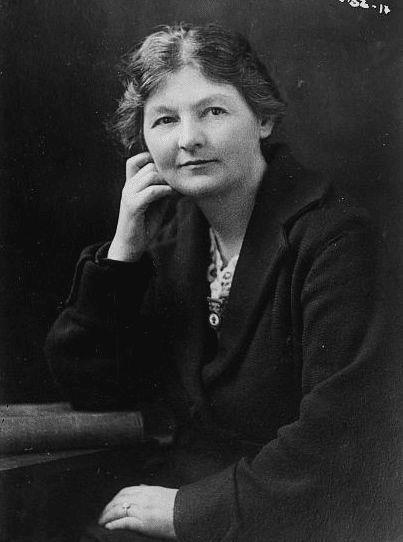

For quite a long time, the role of women has been devalued in many areas of life. Nowadays, we are used to the fact that a woman can be a careerist, run their own business and even work as a bus driver. However, even in the modern world, we can come across some of the preserved gender stereotypes. A few decades ago, it was difficult to even imagine a self-confident and intelligent woman who could not only take care of her own family but also, for example, rule an entire country. Nevertheless, such women existed at different times, but it was usually much more difficult for them to succeed in their activities than for men. Women sometimes had to literally fight for the right to receive a scientific degree or take a seat in the country’s parliament. Margaret Bondfield was one of them. Who was this woman and why did her name go down in history? Learn more at london-yes.
A strong character that was formed by life circumstances
Margaret Bondfield was born on March 17, 1873. Her life was challenging from an early childhood. The girl was one of the eleven children in the family. Her parents couldn’t boast of great wealth, as they were ordinary workers. Margaret didn’t receive a proper education and was taught just the basics. At the age of fourteen, she left home and went to study at a draper’s shop in Sussex. Later, Margaret ended up in London, with which she connected her future life. Her brother Frank lived there and the girl worked in one of the city’s stores. Here, she encountered terrible working conditions. The low salary and large amount of work prompted her to change something. Therefore, in 1894, she was elected to the National Amalgamated Union of Shop Assistants, Warehousemen and Clerks (NAUSAWC). That event became a key moment in her life, as it marked the beginning of her political career.
The first steps in the political sphere
The year 1898 was quite important for Margaret Bondfield. In that year, she became the assistant secretary of NAUSAWC and her study on wages and working conditions was finally published. Margaret left the union after ten years of service. In 1910 and 1913, she ran for London County Council as a Labour Party candidate but wasn’t successful. In general, Margaret took an active part in the labour movement at that time. During the First World War, she also didn’t remain aloof from political issues. In particular, she took part in a conference of women opposing the war in Bern.
The height of professional activity in the Parliament
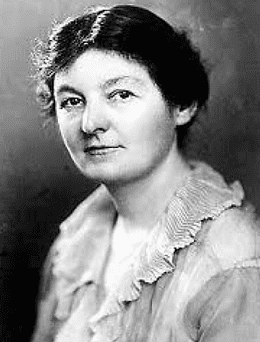
In 1923, Margaret Bondfield was elected to the House of Commons in Northampton. She had already run elections in 1920 and 1922, but those attempts were unsuccessful for both Margaret and the entire Labour Party in general. Her later political career was full of ups and downs. She reached incredible highs and fell to devastating lows. But, in any case, the name of this woman became known to the whole world precisely because she became the first woman minister in the history of Great Britain. Margaret took the post of Minister of Labour in 1929 and held it until 1931. She played a big role in solving unemployment. One of her bills drew attention to the urgency of implementing the unemployment insurance programme. Unfortunately, her urges weren’t realised because of the rapidly deteriorating situation in the country, which led to certain changes in the government. Probably, that was the reason why Margaret Bondfield lost the election in 1931. A little later, she became the president of the Women’s Group on Public Welfare, but she never managed to return to politics. Margaret Bondfield passed away on June 16, 1953.