
World history has repeatedly proven that war is horror and sadness, cruelty and atrocity, death and bloodshed. However, such terrible events often unite people for a common goal. The same happened to Great Britain during the two world wars. At that time, women played an important role in many spheres of life. Those whose activities had been previously devalued by society became a driving force for the economy of the country and in particular for its capital. Women started to form various organisations. One of them was The Women’s Land Army. Its main goal was to support agriculture in wartime conditions. Why was it important and what was the role of the women of London? Learn more at london-yes.
Prerequisites and further activities of the organisation
In general, the creation of such organisations was influenced by the desire of British women to help the country in wartime. Calls to action became the first impetus for their activity. In 1915, women took to the streets of London to demonstrate their desire to join the military service. They also formed queues at various enterprises to replace men who went to fight. In 1916, London started to feel food shortages, so women started to join the agricultural sphere. Therefore, the Ministry of Agriculture created the Women’s Land Army in 1917. At the time of World War I, the organisation consisted of approximately 23,000 women. In general, the organisation distributed its members to places where they were most needed. Women from different parts of the country united for a common goal. There were many Londoners among them because the capital became the epicentre of actions and rallies.
Ethel Thomas from London was one of the most famous members of the Women’s Land Army. The British botanist and outstanding scientist not only played a big role in the development of science but also helped the country in difficult times. In general, she devoted her entire life to the study of double fertilisation in flowering plants and became the first British woman to publish research on the subject. However, during the First World War, a woman became an inspector for the Women’s Land Army. Moreover, she researched a number of important problems for the Medical Research Council. Ethel Thomas remained a member of the Women’s Land Army until 1919 when the organisation ceased its activities.
Revival of the organisation’s activities
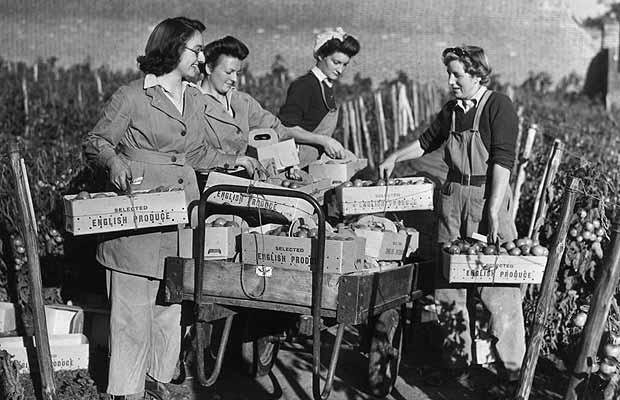
In 1939, when rumours about the possible hostilities started to spread throughout Europe, a need to involve women in work arose again. The British government tried to increase its own production as quickly as possible. The country imported a lot of products, so the threat of running out of basic necessities grew every day. The Women’s Land Army resumed its activities in July 1939. Initially, only women in rural areas and volunteers joined the work, but after the beginning of the Second World War, women from large cities all over the country were involved in agriculture as well. Almost a third of the organisation’s members were Londoners. However, even then there were cases of discrimination. In particular, in 1943, Amelia King from London was refused entry to the organisation because of her dark skin. That case gained wide publicity and was written about in different parts of the world. Therefore, the refusal was cancelled and the woman joined the Women’s Land Army. In general, the members of the organisation began to be called Land Girls. Their activities were indeed extremely important.