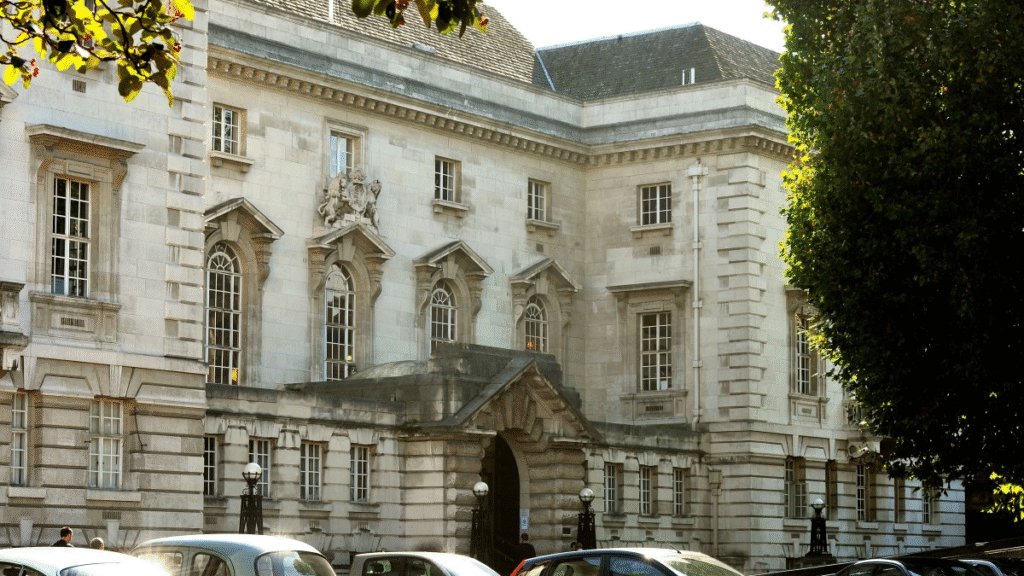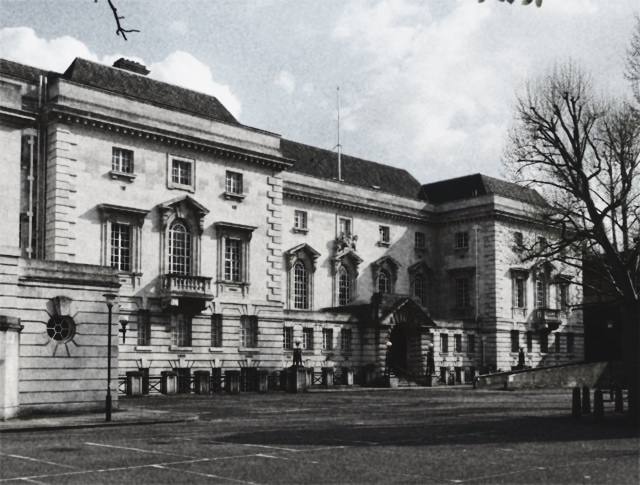

The Inner London Crown Court carries a rich, albeit somber, legacy. Historically synonymous with the “slaughterhouse” due to its proximity to public executions, the site has undergone extensive expansion to become a cornerstone of London’s criminal justice system. Today, it serves as the stage for high-profile trials that shape the UK’s legal discourse. Read more on london-yes.
The Foundations and Evolution of the Court
The original structure on this site opened in 1791, designed by the prominent architect George Gwilt the Elder. Initially built as the Surrey County Sessions House, it stood adjacent to the notorious Horsemonger Lane Gaol, also a Gwilt creation. Throughout the 19th century, the court handled sensational cases, including the 1831 trial of the Reverend Robert Taylor, who was convicted of blasphemy. The neighbouring prison remained operational until 1881.
The late 19th century brought a major overhaul of London’s local government. In 1889, the newly formed London County Council took over both the Middlesex and Surrey County Sessions Houses. However, as neither building matched its historical county boundaries, the division of judicial functions proved inefficient. Consequently, the Middlesex Sessions House was closed, while Surrey moved its administrative headquarters to County Hall in Kingston upon Thames.
A defining moment for the current building came in 1921, when architect William Edward Riley completed a massive reconstruction. The reimagined Sessions House boasted a classical symmetrical facade with eleven windows overlooking Newington Causeway. Its grand arched entrance, topped with a pediment, and a mix of arched and square windows on the upper floors, gave the building a sense of solemnity and prestige. In 1971, it was officially designated as a Crown Court.
In February 2023, the court heard the disturbing case of preacher Climate Wiseman. As the leader of the Kingdom Church in Camberwell, Wiseman exploited the fears of the Covid-19 pandemic to market a fraudulent “cure.” He convinced his followers that without his concoction of hyssop, cedarwood, and olive oil, they were at risk of death. The court found him guilty of fraud, sentencing him to one year in prison, 130 hours of community service, and a fine exceeding £60,000. Despite an attempt to appeal, the Court of Appeal upheld the conviction, stating there were no grounds for review.
Another high-profile trial that gripped British media was that of former vicar Chris Brain. Between 1986 and 1995, Brain led the Nine O’Clock Service, a Sheffield-based unconventional Christian community often described as a cult. Over the years, survivors came forward with accounts of abuse. On 20 August 2025, the Inner London Crown Court found the 68-year-old guilty of 17 counts of sexual offences committed during his leadership of the movement.
The Legacy of Inner London Crown Court
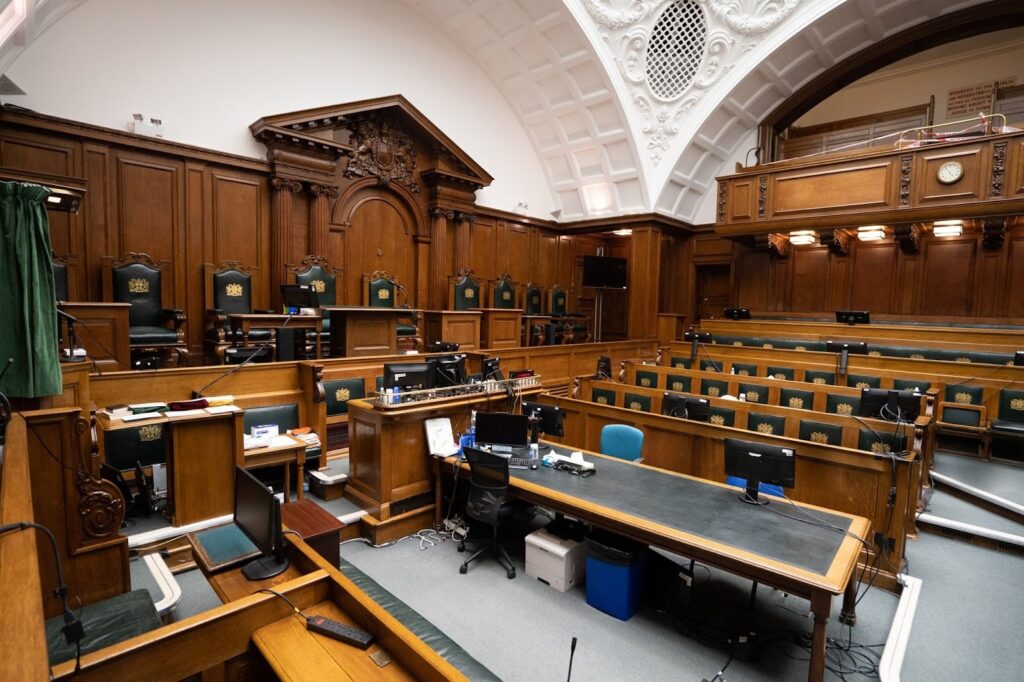
Inner London Crown Court holds a unique position in both British legal history and the London landscape. Its courtrooms continue to handle cases that spark national debate, from religious fraud to systemic abuse. By meticulously dismantling the influence of deceptive leaders, the court serves as a vital safeguard for the vulnerable in modern Britain. Its enduring presence ensures that even the most complex cultural and religious conflicts are resolved through the transparent lens of the rule of law. While the shadows of its grim past remain, the court’s focus has firmly shifted from the finality of public punishment to the relentless pursuit of social justice. As a Grade II listed building, it stands as a testament to over two centuries of architectural heritage and the constant evolution of the British justice system.