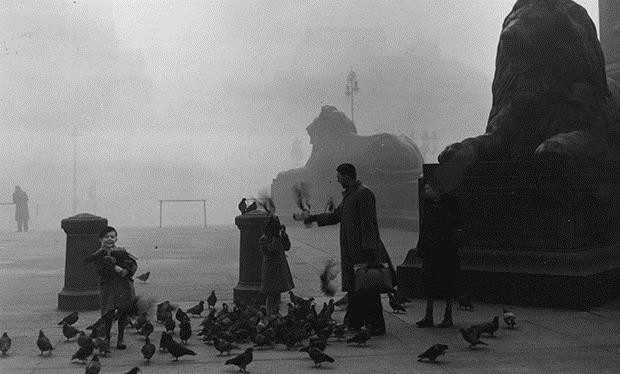

London’s experienced a number of environmental disasters throughout its history. The Great Smog of 1952 was one of them. Londoners have never encountered such levels of air pollution. For many of them, the event turned out to be even more terrible than shelling during the Second World War. However, the disaster, which was caused by weather conditions, also influenced the political life of the city. How did the environmental disaster affect Londoners’ lives and why were the governmental speeches and decisions so important? Learn more at london-yes.
Usual fog that evolved into dangerous smog
It all started with an anticyclone that hit London on December 4, 1952. Then the cool and warm air collided. Thus, an inversion of temperature covered the city with fog. If we take into account the climatic features of London, we can say that fog is a common phenomenon in this region. So, the residents of the city were used to such weather conditions and didn’t expect anything unusual. However, the fog mixed with exhaust fumes as well as smoke from industrial facilities and homes. The situation was complicated by the lack of wind. Soon, the formation of dangerous smog led to a series of tragic events.
This environmental disaster led to the suspension of public transport (except the underground), the cancellation of many open-space events and the complicated work of emergency services. Visibility was reduced to a few metres. Sometimes (especially in the dark) people couldn’t even see their feet. A little later, concerts and film screenings had to be cancelled too because the smog got into the large premises. During a few weeks, about 4,000 people died because of it. However, later, statistics showed that the smog caused many more deaths because it provoked diseases in many people and they suffered from them for several years.
The role of the Prime Minister and other authorities
Of course, like any other important event, the Great Smog affected the activities of the government. However, that phenomenon was often exaggerated in the press from a political point of view. The reaction of the government developed at a moderate pace, although there were some accusations. Thus, the Prime Minister and other members of the government were criticised by representatives of the Labour Party. In particular, Winston Churchill was accused of an unfair and incompetent attitude to the needs of the nation. Apparently, the Prime Minister wasn’t interested in developing the conflict, so he didn’t engage in heated debates. In general, the fault of the government was rather doubtful, since the smog was caused by weather conditions.
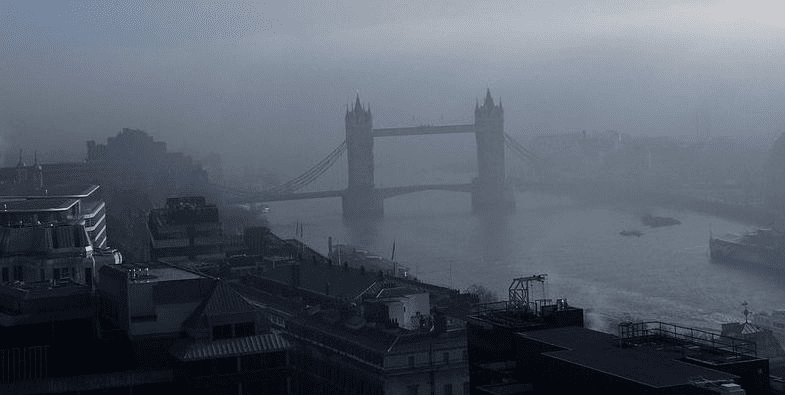
In any case, the government adopted a number of laws regarding environmental problems. Heavy smog became the impetus for programmes to improve air quality. After all, one of the reasons for the terrible fog was the excessive use of coal. Thus, the subsequent laws provided for a reduction in its consumption. Environmental legislation has undergone significant changes since the City of London Act was passed in 1954. The first results of the air pollution reduction were immediate. Two years later, the authorities adopted the Clean Air Acts. Ordinary people and entrepreneurs were encouraged to switch to alternative types of fireplaces and energy resources. Despite the improvement of the ecological situation, this weather phenomenon came back in 1962 and the city was engulfed by fog again. Apparently, there will always be a force that the government can’t stop, such as the mighty force of nature.