
During the Second World War, the capital of Great Britain suffered from constant bombing. Such events left their mark not only on the city buildings but also on people’s memories. Therefore, many Londoners wanted to capture such moments in history. What objects testify to the terrible events in the city? What did people create to remember the horrors of war? Why do some buildings hide state secrets? How did one of London’s most important religious sites survive the war? Learn more at london-yes.
Demonstration of strength and power
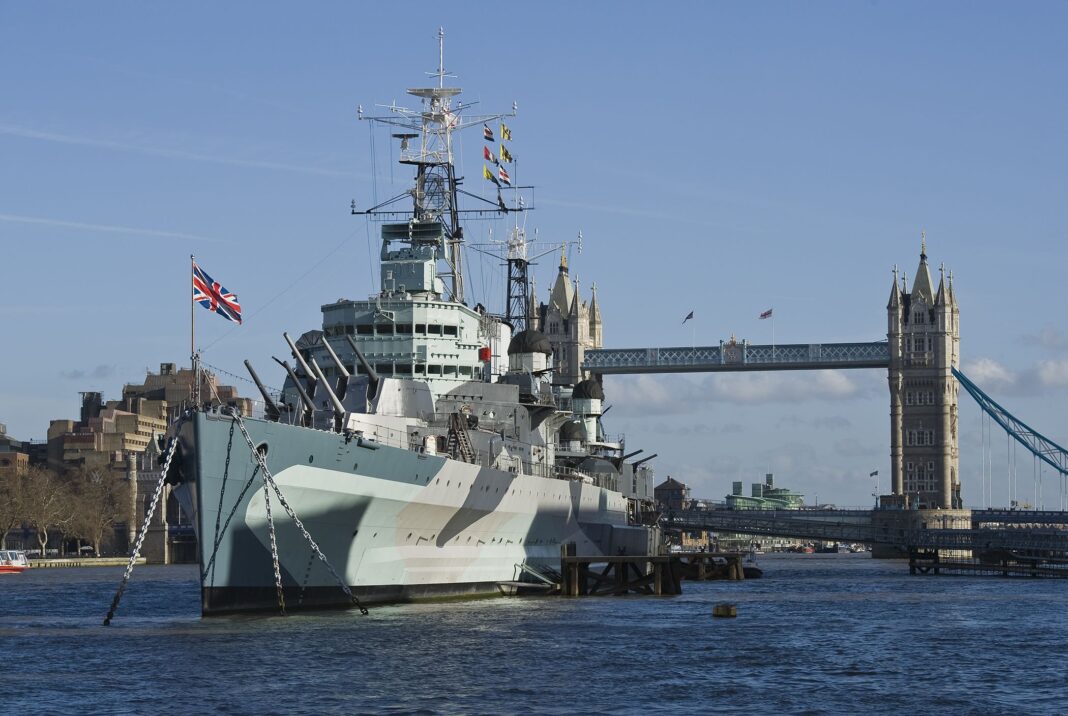
Although a lot of people were aware of the terrible consequences and extremely depressing tragedy of war, most countries also understood the importance of showing their strength. One of those objects symbolising power was HMS Belfast. Today, it is part of the Imperial War Museum, but during the Second World War, it played an important role in ensuring the security of the country. The ship blew up on a German mine during the first months of active military actions in 1939. Repairs lasted about two years, but later, Belfast showed all its strength in real combat conditions. In December 1943, the ship took part in the Battle of the North Cape (Norway). As a result, the Scharnhorst (a ship of the German Navy) sank after being hit by several torpedoes. In June 1944, Belfast played an important role in supporting the landing of assault troops on the coast of Normandy (known as Neptune Operation). After participating in several more battles, the ship was transferred to the reserve of the British fleet. In 1971, it acquired the status of a museum and was open to visitors.
The Imperial War Museum in London is also a symbol of power. It houses the most unique exhibits dedicated to military events and the stories of British soldiers as well as ordinary civilians whose actions sometimes were as important. The museum can tell a lot about the Second World War.
A symbol of faith in the upcoming peace
Another symbol embodying the horrors of war and faith in a bright future is St Paul’s Cathedral. This place survived several bombings. For the first time, the time bomb was defused. If it hadn’t been done, the cathedral would have been destroyed. The main altar was destroyed during the second air raid. The 1941 blow left a hole in the floor above the crypt. However, even under such conditions, St Paul’s Cathedral remained a place of faith and hope. After the end of the war, it became a symbol of peace.
Government secrets
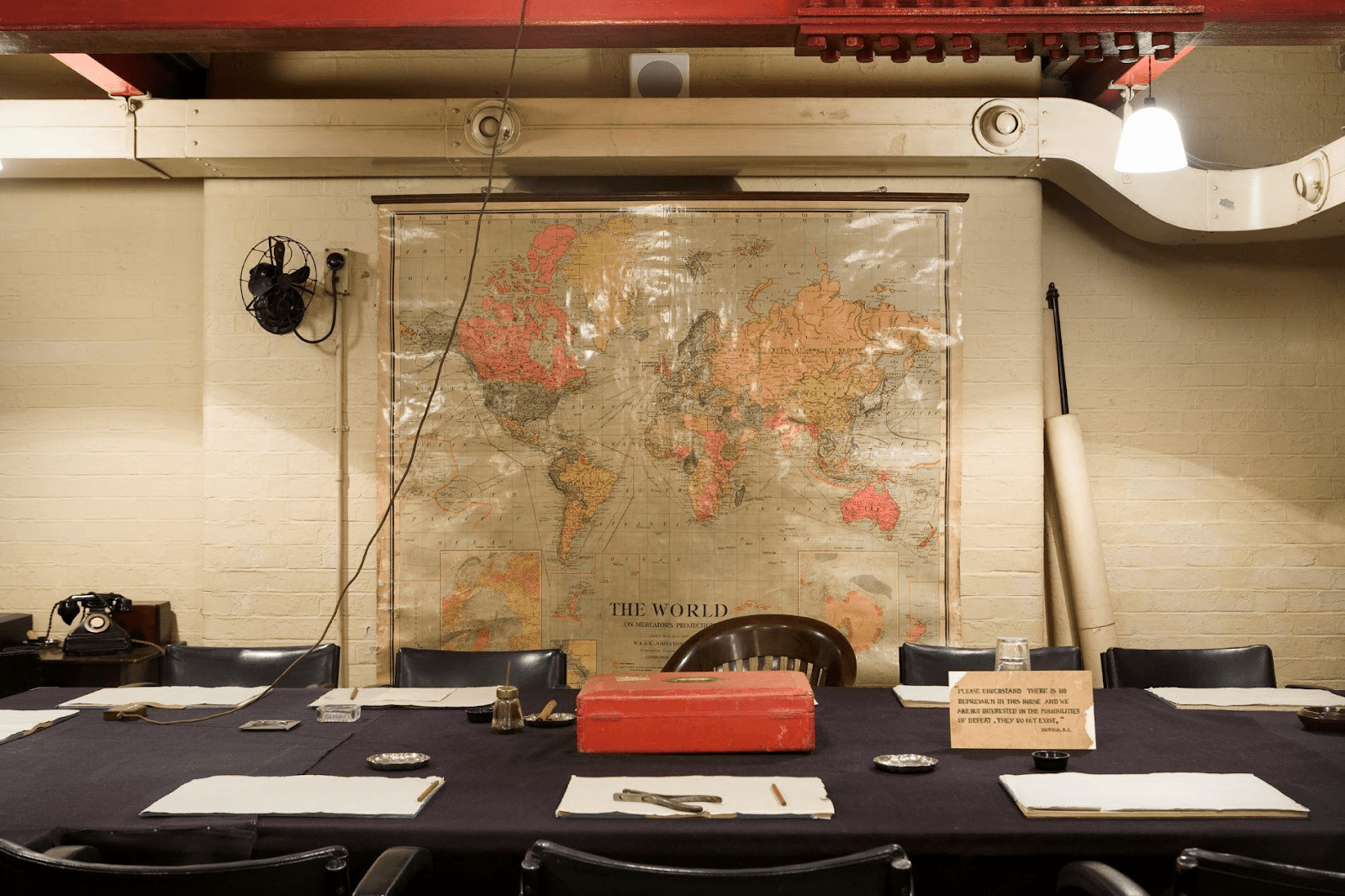
Photo source: Imperial War Museums
After the end of any war, society learns a lot of information and state secrets have always been one of the most interesting ones. Thus, after the end of the Second World War, Londoners found out about Winston Churchill’s War Rooms. Although their official opening to the public took place in 1984, the place wasn’t destroyed because of its unique historical value. This object tells us about the activities of the British government during the war. In fact, it was much more than just an underground meeting room or an office. Life was raging here. The facility included a kitchen, private rooms, telephone rooms and offices, as well as provided for increased security. Its labyrinths demonstrate the everyday life and professional activities of Winston Churchill and the people who surrounded him. Nowadays, everybody can see such an extremely important heritage. A variety of photographs, speeches and documents help revive the mysteries of wartime.