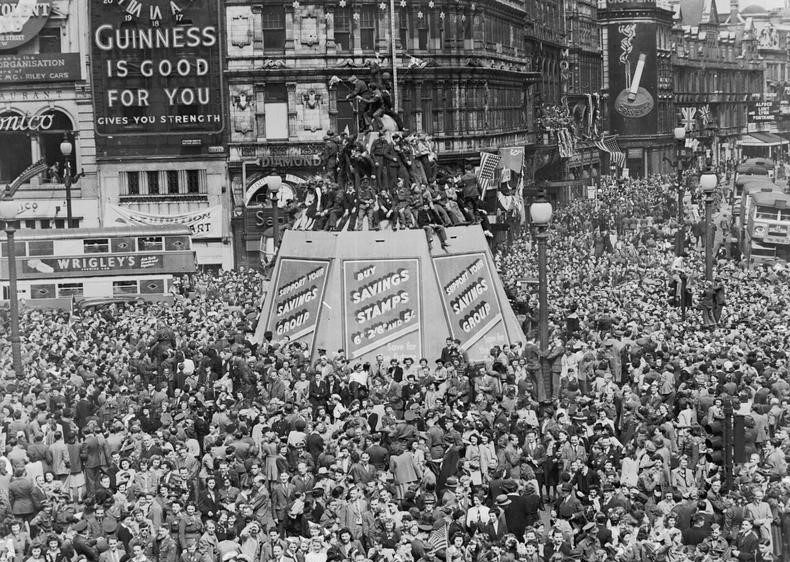

The end of the Second World War was a relief for most countries of the world. People were filled with extraordinary emotions and feelings. It was happiness intertwined with sadness and pity for all the people who gave their lives for peace. After the victory over Nazism was declared, thousands of people flooded the squares of London. What was the reaction of the authorities? What happened in the city during this period of history? How did the capital recover after the war? Learn more at london-yes.
Consequences of the war and recovery prospects
Comparing the damage the war brought to many countries of Europe and Great Britain, we can conclude that London was less affected than other cities. Due to its favourable geographical location, the capital of Great Britain was only threatened by aerial bombardment. Artillery, tanks, and army personnel never occupied the city. Therefore, the recovery prospects here were a little bit better than in many European countries. However, that new stage of history required the dedicated work of people, many resources and ideas.
Joy in the eyes and development of the city
However, even aerial attacks managed to cause devastating damage to the city. A large number of architectural objects, businesses and ordinary residential buildings were destroyed. In addition, the life of Britons was harsh during the war. Children had to be evacuated away from large cities, the level of education decreased, everybody (both women and children) was involved in agricultural work and the shortage of various types of products grew daily. So on Victory Day, people gathered on the streets of the city with joy and happiness in their eyes. The population was so tired of those terrible events that they would accept any job for the sake of peace. Therefore, London recovered quite quickly.
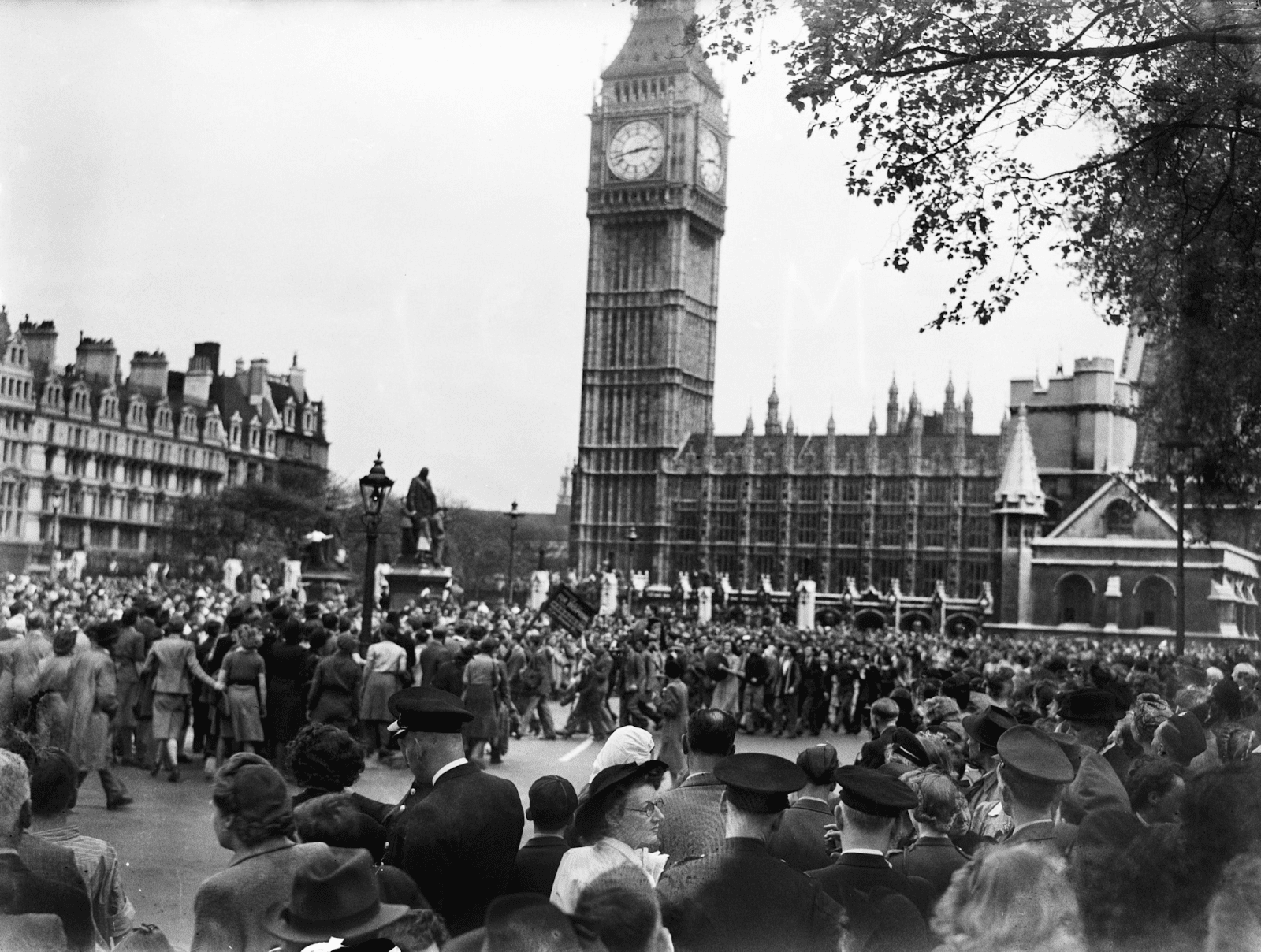
Photo source: English Heritage
The first change was the victory of the Labour Party in the 1945 election. It paved the way for new reforms related to children’s education, welfare and health care. Thus, the National Health Service, which provided free medical care, was created in 1948. In addition, authorities adopted family assistance programmes and paid great attention to free education for children. Certain changes in legislation were extremely necessary as well. After all, the post-war period has been always associated with transformations in social spheres. However, the city needed restoration of its facilities too. That period can be called the beginning of the great development of London. One of the most famous reconstruction plans was developed by the British architect Patrick Abercrombie. His project balanced the construction of residential buildings, enterprises and notable architectural objects. However, there were certain restrictions in the capital. For example, London’s Green Belt (an area of green space and agricultural land) was considered very important for the city, so the construction of buildings in this territory was prohibited. Therefore, new districts arose around that zone. Thus, the gradual development created the modern city. The construction of the first 10-storey building was completed in 1949. It was a part of Patrick Abercrombie’s plan. High-rise buildings solved the problem of rapid population growth, as well as provided housing to those who lost it due to the war. More than half a million new apartments had been built in the city by the 1960s.