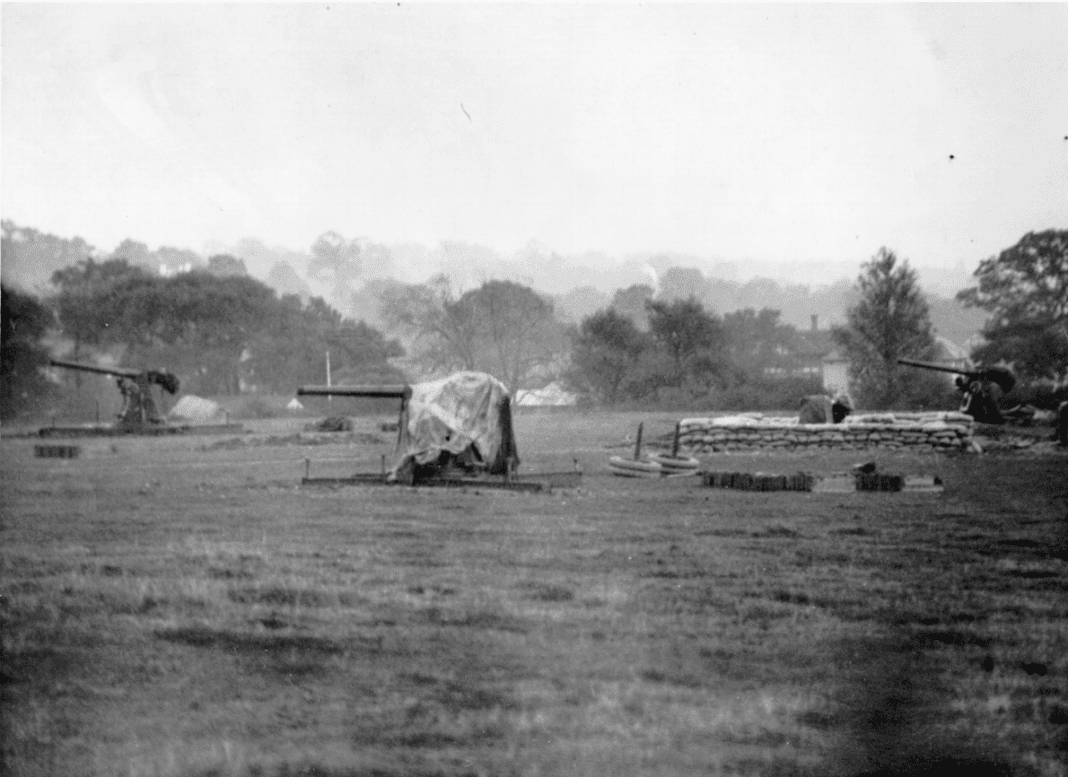

As the Second World War became inevitable, Britain underwent a massive fortification programme. In Enfield, local authorities — drawing on past experience — recognised the grave threat air raids posed to civilians. They began roofing over trenches and constructing defensive works. A vital part of the capital’s shield against German bombers was the Slades Hill army camp. With its anti-aircraft battery and heavy guns, it became a cornerstone of Britain’s air defence. Read more on london-yes.
The Origins and Development of Slades Hill
Slades Hill army camp and its anti-aircraft battery were established in Enfield at the outbreak of the Second World War. Large mobile guns had already been stationed nearby during the 1938 Munich Crisis. Over time, the local infrastructure was adapted; to provide access to the new camp, an old trackway was transformed into a proper road, now known as Camp Road.
The site’s geography was defined by two watercourses: Merryhills Brook and Salmons Brook. The former crosses Camp Road, while the latter flows along the eastern boundary. Another landmark was the Enfield 26th Rifle Club to the south. Dating back to the First Boer War, the club has a long history and remains active today.
The battery’s strategic position north of the camp was vital for London’s air defence. It was armed with four QF 4.5-inch Mark II anti-aircraft guns. These were adapted from naval artillery of the same calibre and officially approved for land-based use in 1938.
The guns were mounted on concrete emplacements to ensure stability and protection. The battery’s primary mission was to defend the capital from incoming Luftwaffe raids. According to eyewitnesses, the roar of the guns was so intense that the shockwaves would blow open the main doors of the nearby Chase Farm Hospital during action.
In 1941, Winston Churchill’s daughter was posted to the Slades Hill battery. Serving in the Auxiliary Territorial Service (ATS), Mary Soames spent a brief period at the site before being transferred to another unit in Hyde Park.
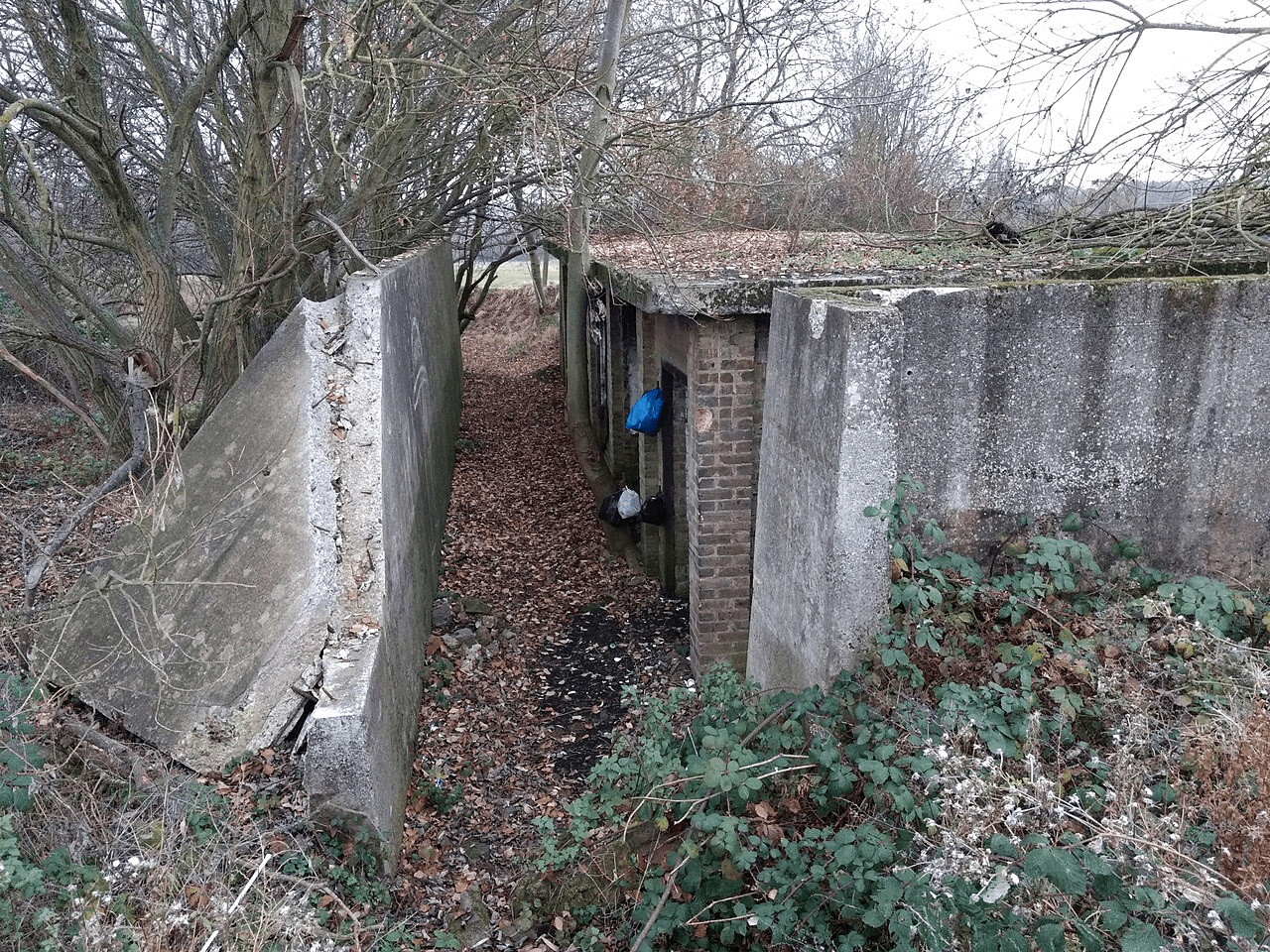
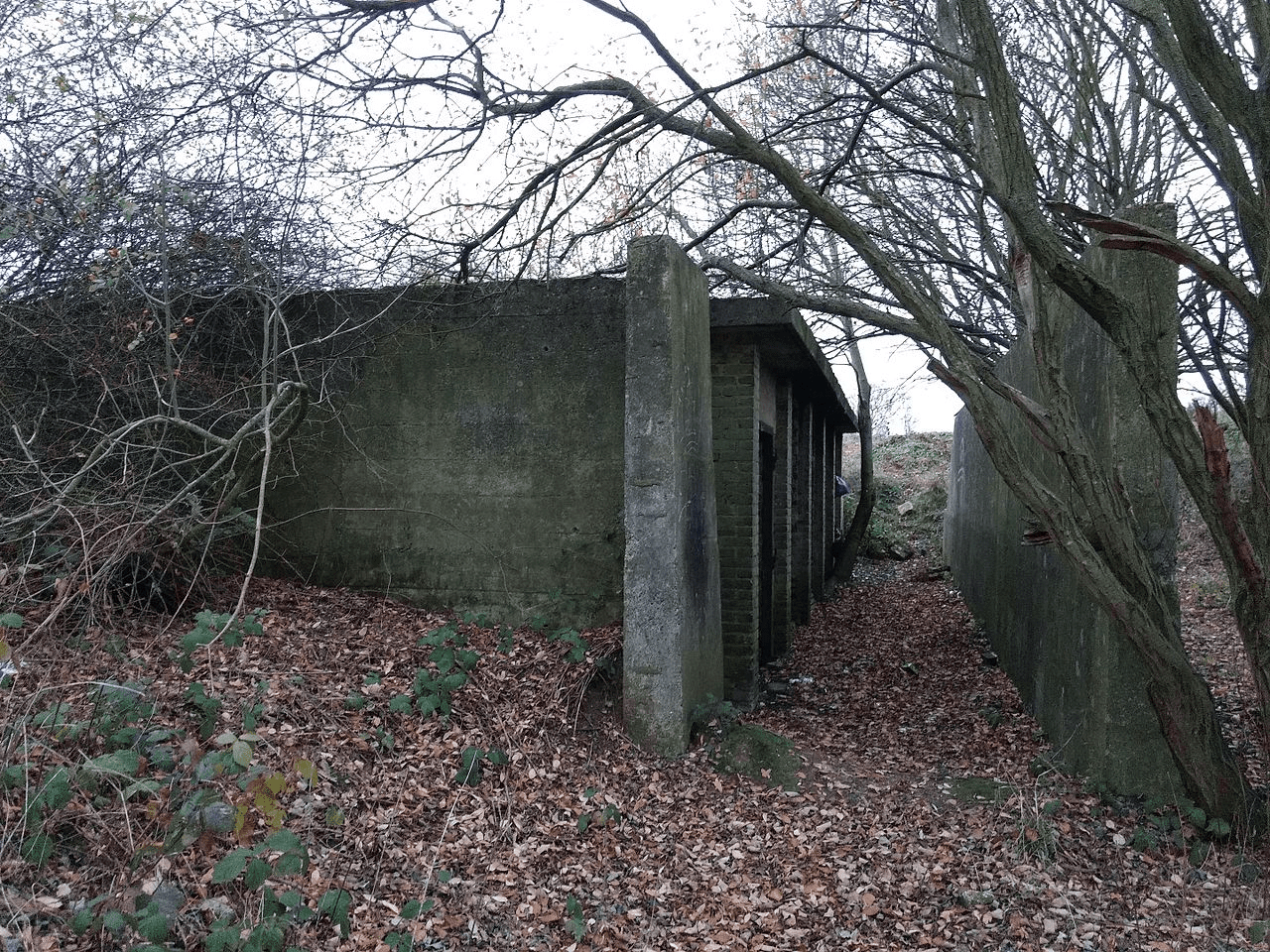
Following the war, Slades Hill shared the fate of many military sites. Initially, the buildings were used as an army archive to store salvaged documents. Meanwhile, the derelict barracks became temporary shelter for the homeless. By the early 1960s, the camp was officially decommissioned. Much of the site was eventually filled with soil and rubble from local road construction projects.
Moovit app
Legacy and Significance
Slades Hill army camp played a pivotal role in protecting London from German air strikes. Its advantageous position allowed soldiers to utilise the surrounding terrain for natural cover and camouflage. The development of such strategic sites helped shape the modern landscape and transport links of the Enfield district. Though the structures are gone, they remain a significant chapter in the study of wartime infrastructure and the transition of military sites back to civilian use.
Wikipedia