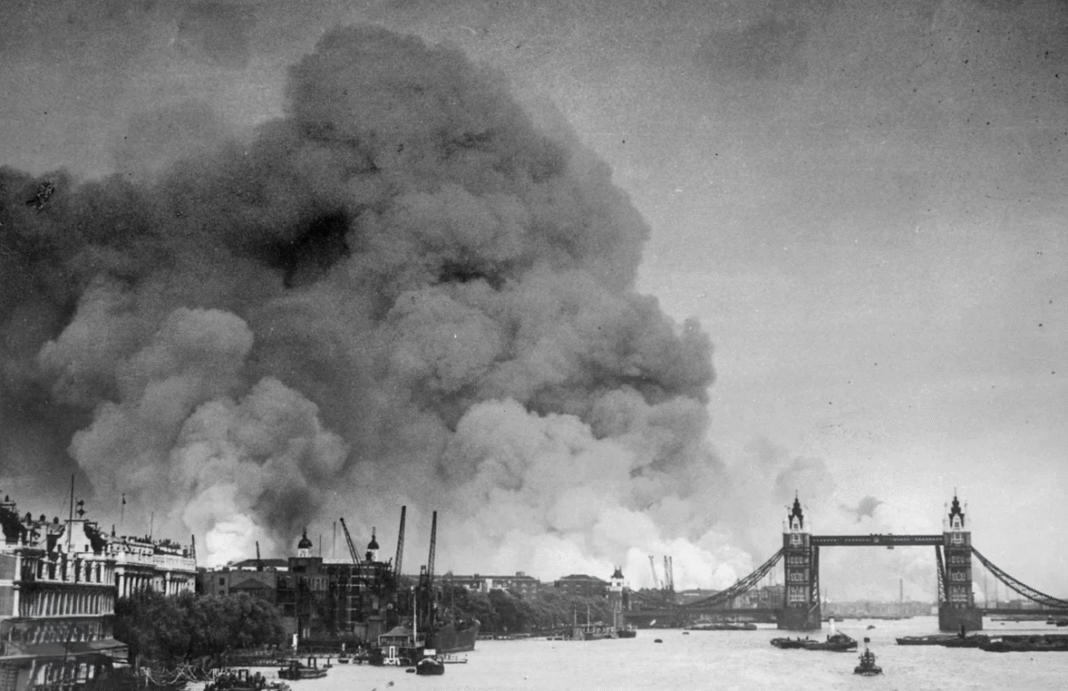

Britain was a maritime powerhouse long before it became an industrial and political superpower. For centuries, its fleet, trade routes, and ports served as the foundation of the nation’s might. That is why, at the outbreak of World War II, control over the seas was not merely a matter of prestige for London—it was a matter of sheer survival. While preparing for Operation Sea Lion, Berlin openly admitted that British naval dominance made any amphibious assault extremely difficult. However, without air superiority, this operation was doomed to fail anyway.
On September 7, 1940, the first day of the Blitz, German aircraft launched a massive strike specifically targeting the London Docks. This marked the beginning of a months-long struggle where wharves, warehouses, ships, and railway lines essentially became the frontline. To learn how the London Docks survived World War II, why they were so crucial to Britain, and how they kept operating under a hail of bombs, read more on london-yes.com.
The History of the Port of London: Why the Docks Became a Strategic Target
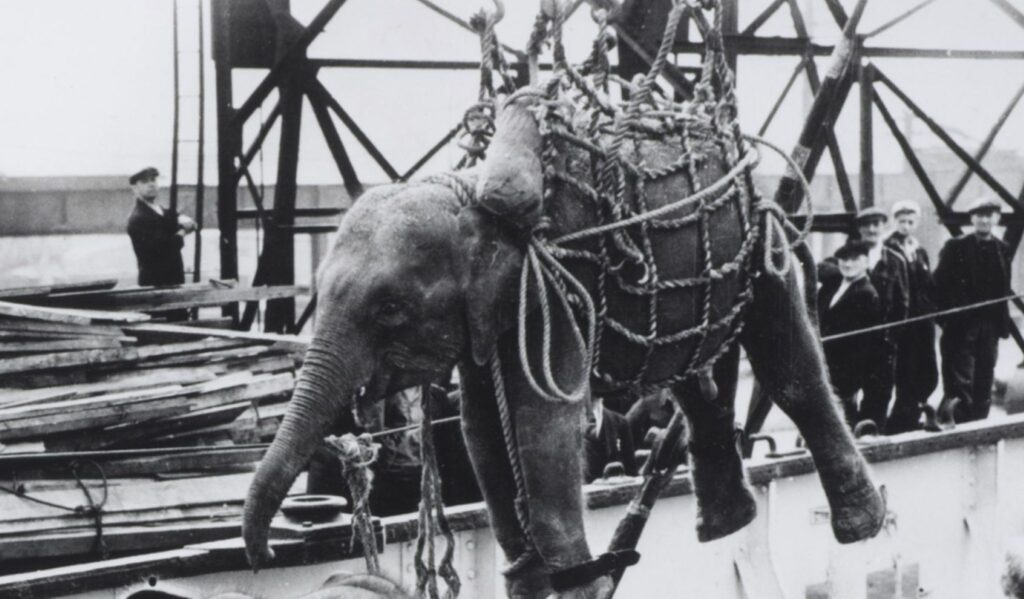
The Port of London evolved over centuries alongside the city itself. However, it was in the 19th century that it began transforming into a massive network of specialized docks.
A major turning point was the opening of the West India Docks in 1802. It was London’s first enclosed dock system, designed to streamline the colossal flow of cargo on the Thames. Soon after, the East India Docks, Millwall, Surrey Commercial, and other harbors followed. The second half of the 19th century saw the construction of the Royal Docks—an ambitious complex comprising the Victoria, Albert, and King George V Docks.
The Royal Docks became a true industrial giant. The Victoria Dock opened in 1855, the Albert Dock in 1880, and the King George V Dock was completed in 1921. The latter featured a 225-meter lock, enabling it to accommodate the largest ocean liners of its time.
The reason for this rapid expansion was simple: London needed to feed a sprawling metropolis while sustaining trade on an imperial scale. Grain, meat, fruit, tobacco, timber, sugar, and other goods were unloaded at the wharves daily. The Royal Docks, in particular, became a vital hub for food supplies arriving from India, Australia, New Zealand, and across the globe.
By the early 20th century, the port system had grown so complex that unified management became an absolute necessity. In 1908, Parliament passed the Port of London Act, and in March 1909, the Port of London Authority (PLA) began operations. Taking control of the river and a significant portion of the dock infrastructure, the PLA spearheaded massive modernization efforts.
In the 1930s, the scale of the Port of London was truly imperial. The enclosed docks boasted a water area of 713 acres, with wharves stretching over 36 miles in total. In 1938, the port handled 44.6 million tons of cargo—an all-time pre-war peak.
Thus, by 1939, the London Docks were a massive supply artery for the entire nation. Unsurprisingly, with the outbreak of war, they automatically became a prime strategic target.
Target Area A: Why the London Docks Became the Luftwaffe’s Prime Target
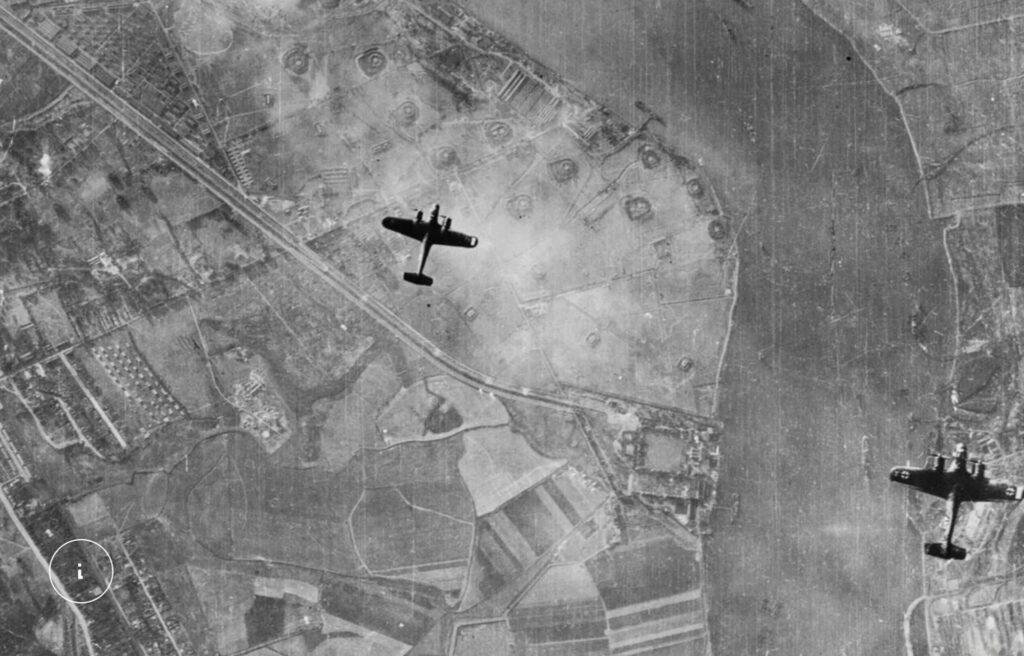
On the eve of World War II, the port’s importance was measured by far more than just the number of ships it berthed. The lion’s share of Britain’s vital imports flowed through it. The capital relied heavily on maritime deliveries of food and raw materials. Consequently, any serious disruption to the docks would send shockwaves far beyond East London.
German military planners quickly spotted this vulnerability. According to the Museum of London, the port handled over a quarter of British imports, and the industrial areas along the Thames were densely packed with factories, warehouses, and transport infrastructure. In German operational plans, the port was designated as Target Area A—the primary target zone. This included the Royal, West India, Millwall, Surrey Commercial, and St Katharine Docks, along with a host of nearby strategic facilities.
This explains a key characteristic of the air raids on London. The Germans were not merely trying to destroy a few quays. Their goal was to paralyze the entire system: obliterate warehouses, sever railway lines, cripple factories, block ship access, and ignite fires that would make recovery impossible.
For London, this spelled a deeper tragedy. The docks were nestled right in the middle of the densely populated East End. The cargo port and residential neighborhoods practically sat wall-to-wall. As a result, bombing the industrial infrastructure inevitably inflicted a devastating toll on civilians.
Dockworkers also found themselves in a unique position. The nation needed them just as much as soldiers on the frontline. The Port of London Authority’s staff were officially deemed essential to the war effort and were exempt from military conscription. Their battlefield consisted of wharves, warehouses, cranes, and railway tracks.
Bombing the London Docks: The Blitz, Fires, and Port Defense
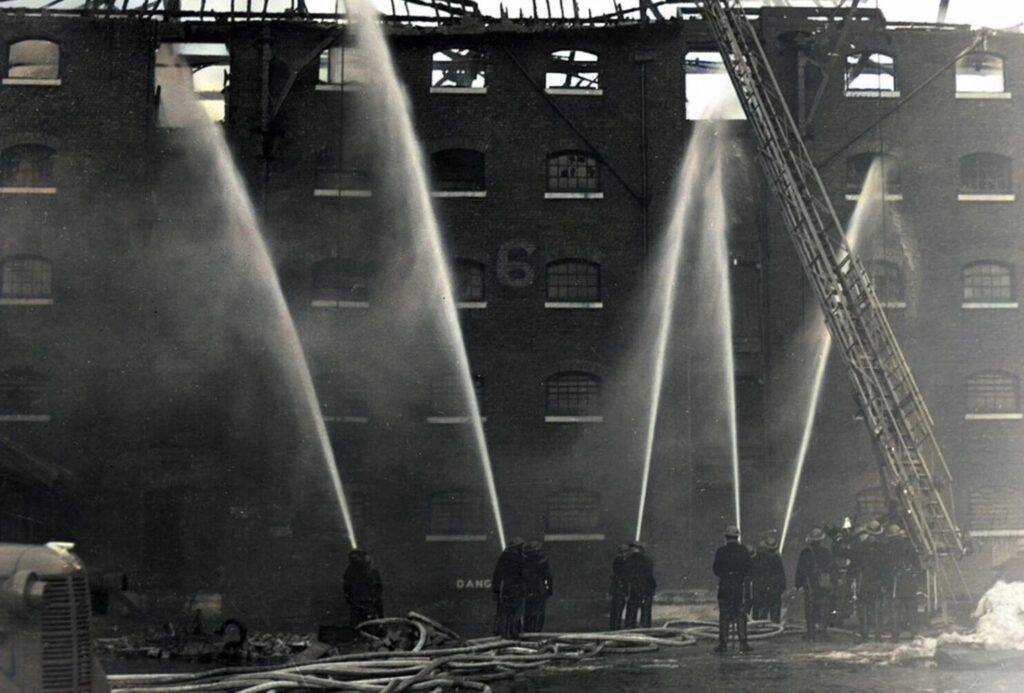
The first devastating strike on the London Docks occurred on September 7, 1940, a day forever remembered as Black Saturday. German aircraft rained fire on the docks and industrial plants along the Thames. The first wave hit around 4:43 PM, followed by an even more massive evening assault. During the second wave alone, German bombers dropped roughly 300 tons of high-explosive bombs and mines.
The resulting fires became a weapon in their own right. The glow over the docks could be seen for miles, and the flames acted as perfect beacons for subsequent bombing runs. Royal Air Force (RAF) records describe massive firestorms around the Surrey Commercial Docks, the East India and Royal Albert Docks, the Woolwich Arsenal, Barking, and other industrial zones along the river.
The destruction did not end that day. The Docklands remained a top priority target for weeks to come. According to the Museum of London, the docks were bombed for 13 consecutive weeks, leaving much of the area in ruins. Even after the main phase of the Blitz ended, the danger persisted: in 1944 and 1945, the air raids were supplemented by V-1 flying bombs and V-2 rockets.
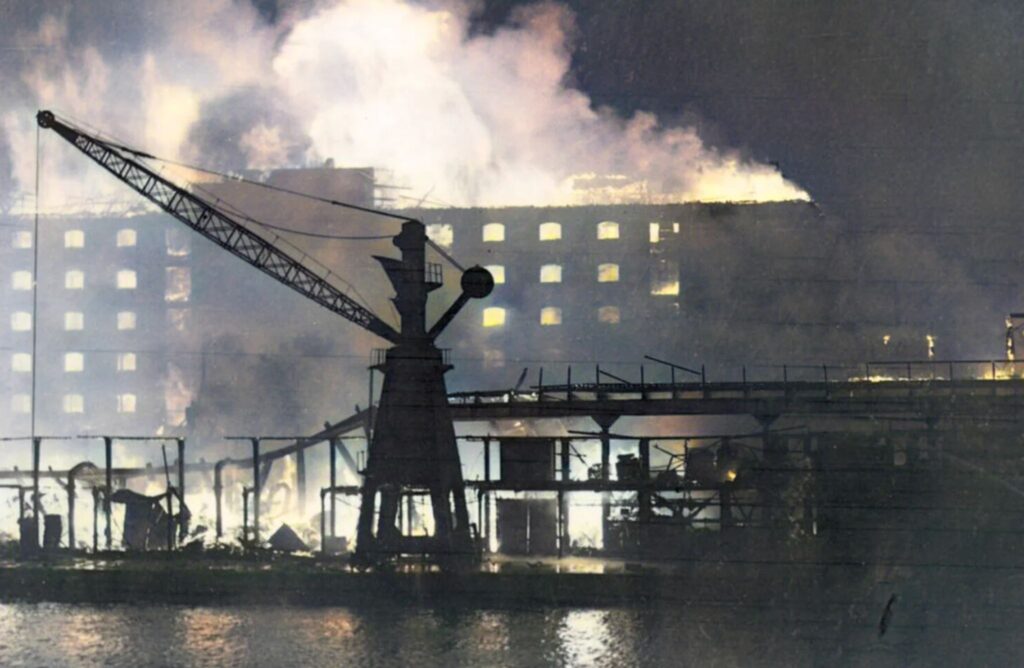
The scale of the devastation is starkly illustrated by one simple fact: over the course of the war, around 25,000 tons of ordnance were dropped on the Docklands, with the Royal Docks and surrounding areas taking the brunt of the assault.
The defense of the Port of London was a multi-layered operation. Anti-aircraft guns, machine-gun nests, observation posts, and air-raid shelters were set up around the docks. Barrage balloons hovered over the industrial zones to deter dive bombers. The Port of London Authority actively participated in defending the river, with its entire staff operating under wartime conditions.
However, the true measure of their defensive success was not a lack of destruction—there was far too much damage to claim invulnerability. The ultimate triumph was something else entirely: the London Docks never stopped working.
From the Blitz to the Normandy Landings: How the London Docks Forged Victory
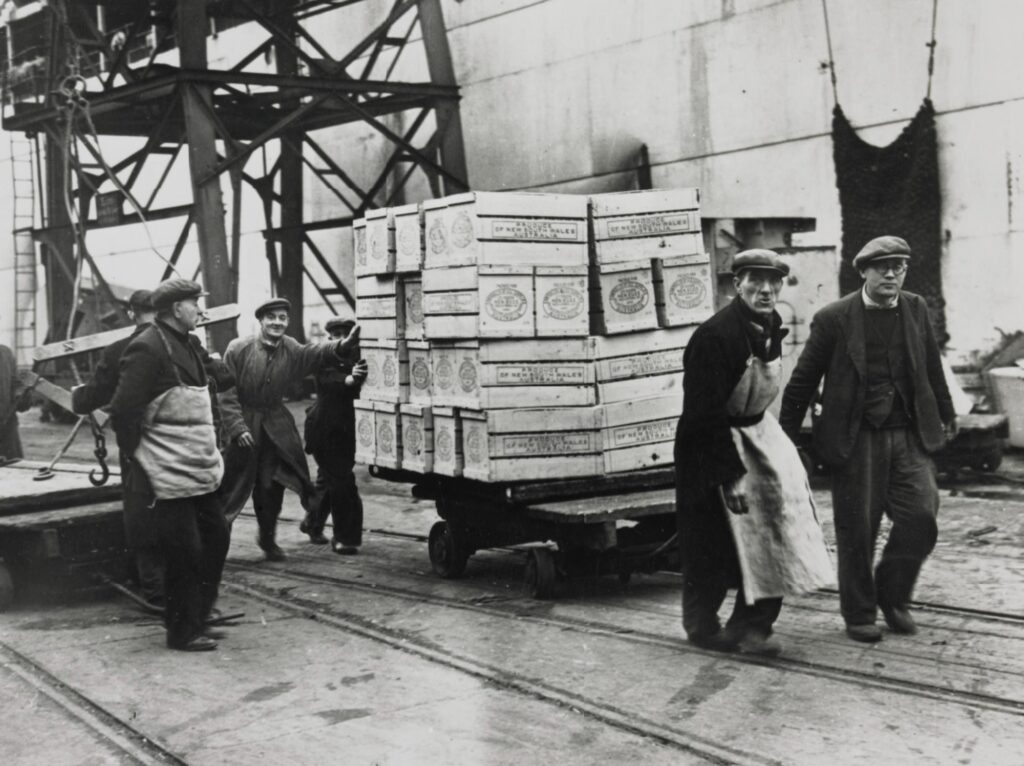
The London Docks did not emerge from World War II unscathed. They were ruthlessly bombed, scorched, and targeted for total paralysis, as the German high command fully grasped their importance to Britain’s economy and war machine. Yet, the enemy never managed to bring the heart of British logistics to a complete standstill.
What is more, in 1944, the port played a crucial role in preparing for the massive Allied offensive. Sections of the famous Mulberry artificial harbors were built in the Royal and East India Docks before being towed across the Channel to the coast of Normandy.
London and the Thames also handled an enormous flow of military cargo for the operation. According to historical records, the assembly of the invasion fleet began in London on May 27, 1944, and continued the following day at Tilbury. In total, hundreds of vessels set sail from the port, carrying tens of thousands of troops, vehicles, and vital supplies.
The port that Hitler had hoped to turn into Britain’s Achilles’ heel ultimately became one of the key instruments of its victory.