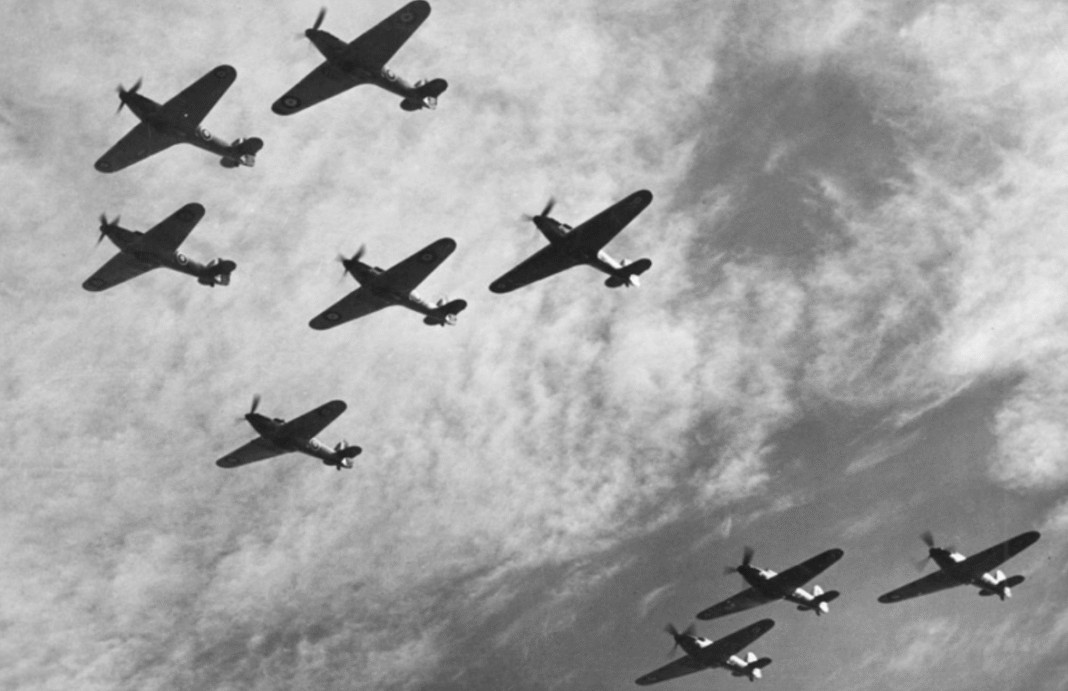

Hitler intended to conquer Britain despite its island geography and the English Channel separating the British coast from mainland Europe. Following the fall of France in the summer of 1940, the German high command viewed an invasion of the British Isles as a very real prospect. To achieve this, Germany first needed to secure air superiority and neutralize the Royal Air Force before setting the stage for an amphibious assault. Thus was born the plan for Operation Sea Lion—a large-scale landing of German forces in southern England.
Yet London took a different stance: surrender was simply not on the table as a way to conclude the war. With Winston Churchill stepping in as Prime Minister and forming a coalition government, British policy became unequivocal: the country would fight on. Churchill openly dismissed any notion of a deal with Hitler, putting the matter bluntly: a peace bought through humiliation and concessions to the aggressor guaranteed neither peace nor security.
Once it became clear that Britain could not be forced into a swift surrender, Germany turned to the Luftwaffe. In the autumn of 1940, the Blitz began—a relentless aerial bombing campaign targeting British cities. On September 7, 1940, a massive strike on the capital marked a new phase in the Battle of Britain, with the East London docks bearing the brunt of the initial assault.
Yet the capital was defended by far more than RAF fighters, anti-aircraft guns, and spotters. The city itself became an active participant in its own defense by imposing strict blackout regulations. Streetlights went completely dark, windows were tightly covered, and residents learned to navigate life in total obscurity. To discover how London defended itself against the Luftwaffe, found refuge in bomb shelters, and literally vanished from German pilots’ maps during the total blackout, read on at london-yes.com.
The London Blitz: How the Air Battle for the Capital Began
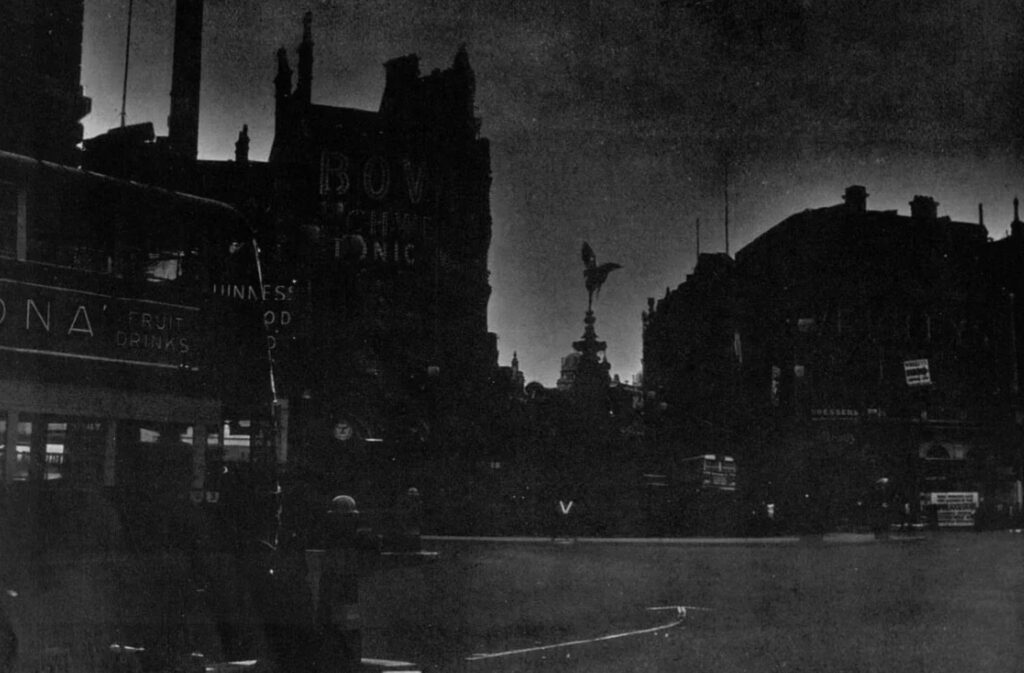
Leading up to the summer of 1940, the German strategy centered primarily on destroying British airfields, radar stations, and fighter aircraft. The goal was purely pragmatic: dismantle Fighter Command and clear the path for an invasion of the British Isles. However, Britain’s defensive network proved far more resilient than Berlin anticipated. Radar provided early warning of incoming raids, RAF fighters scrambled to intercept German bombers, and damaged airfields were restored much faster than German intelligence had predicted.
The focus then shifted to London. On September 7, 1940, the Luftwaffe unleashed heavy day-and-night bombing raids on the capital. The first major strike pounded the East London docks, and attacks soon became a regular occurrence. Over the following weeks, German bombers struck almost every night, aiming to inflict maximum damage on industry, transportation, and civilian infrastructure.
For everyday Londoners, this meant one undeniable reality: the war was no longer something happening across the Channel. Air raid sirens, explosions, infernos, and crumbling buildings became everyday life. Because the heaviest attacks took place under the cover of night, London had to learn not just how to fight back, but how to literally disappear from view. The city had entered blackout conditions well before the Blitz began, but relentless night raids made the system a cornerstone of urban survival.
Night Defense of London in WWII: The RAF, Anti-Aircraft Guns, and Civil Defense
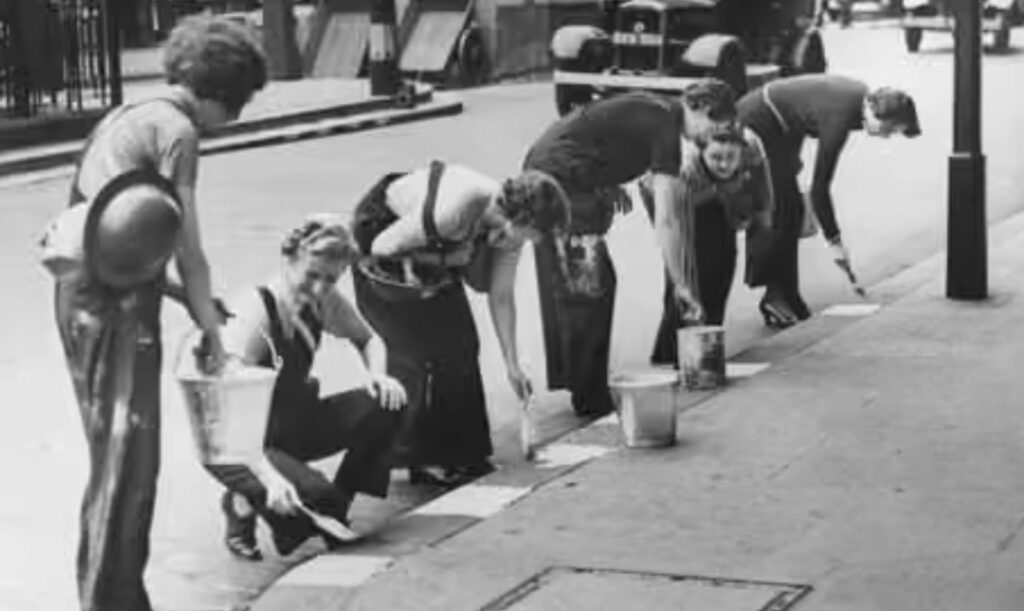
While RAF fighters guarded the skies above London, an equally intricate defense system operated on the ground. Anti-aircraft artillery, searchlights, spotters, firefighters, medics, and civil defense volunteers turned the sprawling metropolis into a finely tuned machine. When the mass raids began, response efforts went far beyond military personnel. Starting September 7, 1940, roughly 25,000 auxiliary personnel assisted the London Fire Brigade in battling the infernos consuming parts of the city.
A crucial role belonged to the Air Raid Precautions (ARP) service. Its wardens inspected shelters, directed citizens during air raids, rescued casualties from collapsed buildings, and—most importantly for this story—strictly enforced blackout regulations. In this way, Britain’s defense stretched far beyond barracks and frontline bases: ordinary Londoners each held their own post on the home front.
While rooftop spotters kept watch to sound timely alarms and fighter pilots held off enemy formations overhead, a quiet war for total darkness played out along the streets. It was an all-out effort across every level of society—from the aces in Spitfire and Hurricane cockpits to ordinary citizens checking in the dead of night to make sure not a single sliver of light escaped their heavy blackout curtains.
The Blackout and London’s Bomb Shelters: Why the City Embraced the Dark
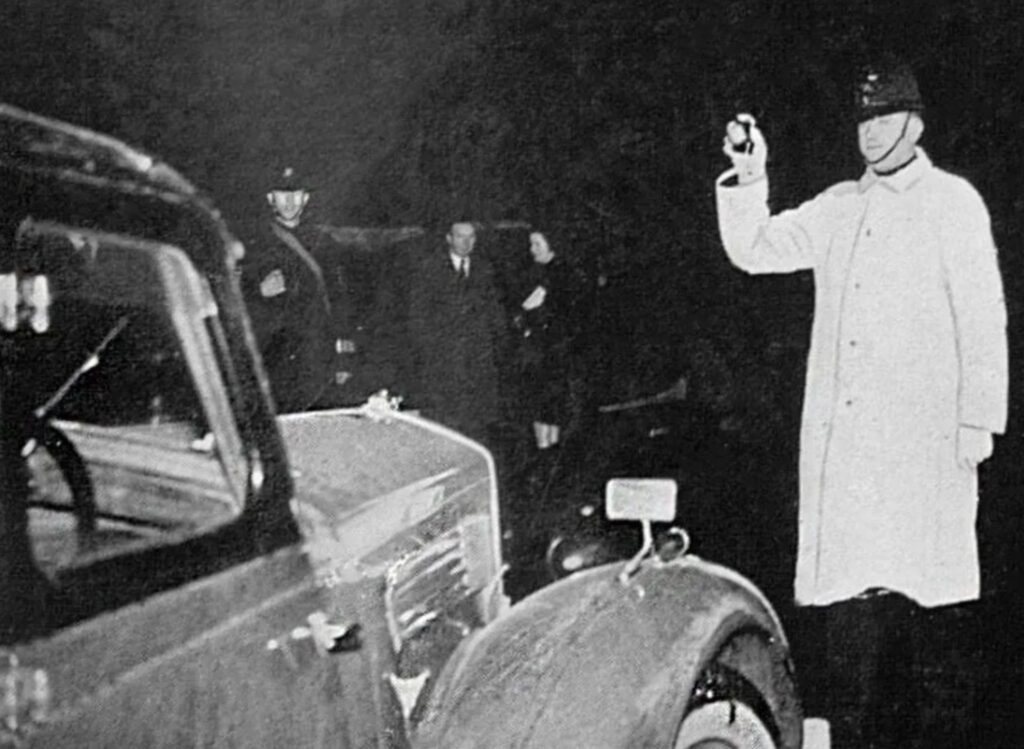
The blackout was instituted across Great Britain on September 1, 1939, two days before the country officially declared war on Germany. The concept was simple: deny German aircrews visual navigation points at night and make urban areas harder to target. Streetlights were switched off, windows were covered with thick, light-blocking material, and residents had to learn to navigate the city almost entirely by touch.
The blackout in wartime London was far more than a simple ban on flicking a switch. In peacetime, the capital—with its sprawling network of streets, rail hubs, factories, and docks—glowed brightly from above. In wartime, that illumination would have been a deadly gift to the enemy. As a result, London effectively switched itself off. The irony was palpable: a bustling metropolis that had never been fond of silence or stillness now had to master the art of going unseen.
Yet even pitch-black darkness could not offer complete protection against aerial bombardment. During the Blitz, people sought refuge in the London Underground, communal shelters, and backyard Anderson shelters. Londoners placed the greatest trust in Tube stations, where deep underground offered a far higher degree of safety. During the war, platforms and tunnels were outfitted with bunks, first aid posts, and canteen services. According to RAF Museum estimates, as many as 170,000 people were sheltering in the Underground simultaneously at the peak of the attacks.
Blackout vs. the Blitz: How London Held Out During World War II
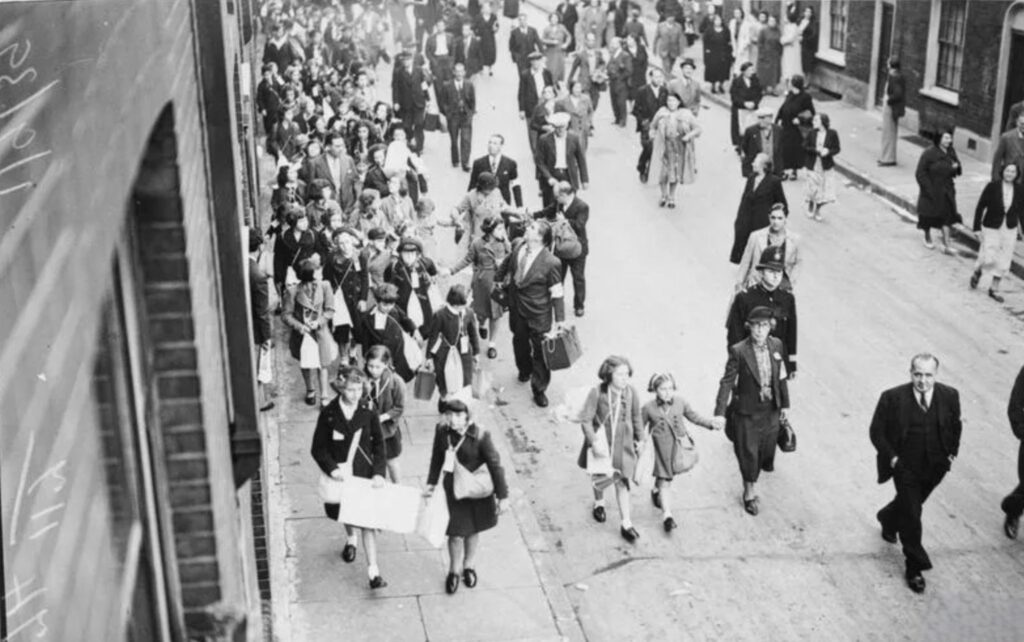
London did not endure because bombs miraculously stopped falling. On the contrary, the Blitz inflicted catastrophic damage, yet it utterly failed to break the city’s resolve. While RAF fighters clashed overhead and anti-aircraft guns roared, and while firefighters and rescue teams braved the ruins below, millions of civilians adhered to a simple yet vital survival rule: take cover, extinguish every source of light, and wait out the raid.
A few years later, the tide of war had turned completely. By February 1945, British and American bombers were unleashing devastating raids on Dresden. London, which in 1940 had been forced to fight for each night’s survival, had weathered its darkest chapter and lived to see the strategic initiative decisively shift to the Allies. Yet this triumph owed its debt not only to warplanes and artillery. An equally decisive, if quiet, weapon was the iron discipline of a metropolis that learned to endure and overcome in total darkness under the blackout.