

London is a city where history and modernity intertwine. The streets of the metropolis hold memories of countless rulers, yet they also shimmer with the latest architectural marvels. This dynamic interplay is perfectly symbolised by City Hall—a building that embodies the city’s governance and progress.
It’s one of the most recognisable landmarks in the UK’s capital, located on the South Bank of the River Thames, near Tower Bridge. Since its construction in 2002, it has served as the seat of the city’s government and the office of the Mayor of London. Its unusual design draws considerable interest from both residents and tourists alike. Read on for more fascinating facts london-yes.
Foundation and Construction
The City Hall building, designed by Norman Foster in a neo-futuristic style, was built at a cost of £43 million. It was constructed on the site of old warehouse docks that once served the London Basin. The building officially opened in July 2002, two years after the formation of the Greater London Authority (GLA). It was leased rather than owned by the GLA, and it was the first permanent home for the Mayor of London and the London Assembly.
Despite its name, the City Hall does not serve a city under UK law, which often causes confusion between Greater London and the City of London, whose headquarters are located at Guildhall. In June 2011, then-Mayor Boris Johnson announced that during the 2012 London Olympics, the building would be referred to as London House.
City Hall served as a hub for decision-making for London’s 8 million residents. It was where mayors like Boris Johnson and Sadiq Khan worked, and where the London Assembly held its meetings. The building was open to all Londoners and frequently hosted exhibitions and various events. However, high rental costs led to a search for alternatives, which allowed for savings of more than £60 million over five years.
Design
A key feature of London’s City Hall is its unique shape. It’s unlike any conventional building and has been compared to a motorcycle helmet, an egg, and even a light bulb. This unique form was intended to reduce the building’s surface area, thereby lowering energy consumption for heating and cooling. Despite claims that the building was designed for sustainability and minimal environmental impact, energy consumption measurements showed it was not as efficient as initially claimed.
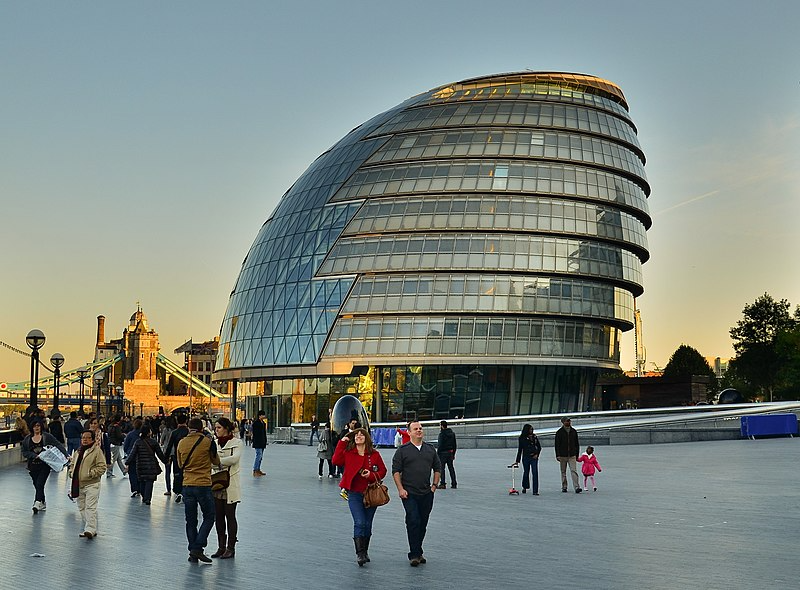
Inside the building, a helical walkway—500 metres long—ascends all 10 floors. At the top, there’s a conference and exhibition space with an open viewing platform. From this walkway, you can see the building’s interior. The debate chamber is located at the foot of the spiral stairs, with seating and desks for Assembly members arranged in a circular layout.
The building’s location is ideal for tourists and architecture enthusiasts. It sits by the River Thames in the London borough of Southwark, part of the larger ‘More London’ complex of shops and offices, with nearby underground stations making it easily accessible.
The Significance of City Hall
City Hall is not just the seat of the city’s government; it’s also a symbol of modern London—a city grappling with global challenges like climate change. Its innovative architecture, public spaces, and eco-friendly solutions make it a significant landmark on the city’s map.
The building also serves as an example of how modern architectural solutions can harmonise with a metropolis’s historical monuments. It plays a vital role in environmental education, hosting conferences, meetings, and seminars dedicated to sustainability, environmental protection, and innovation. For this reason, London’s City Hall doesn’t just govern the city; it also contributes to shaping its future.
The Relocation Decision
Sadiq Khan’s decision to move to a new building, ‘The Crystal’ in Newham, was approved in November 2020 to save money. The move was planned for December 2021 but was completed in January 2022 due to delays. The original building was vacated, and its fate is yet to be decided. It has been partially decommissioned, although the Twentieth Century Society has campaigned for it to be given listed building status.
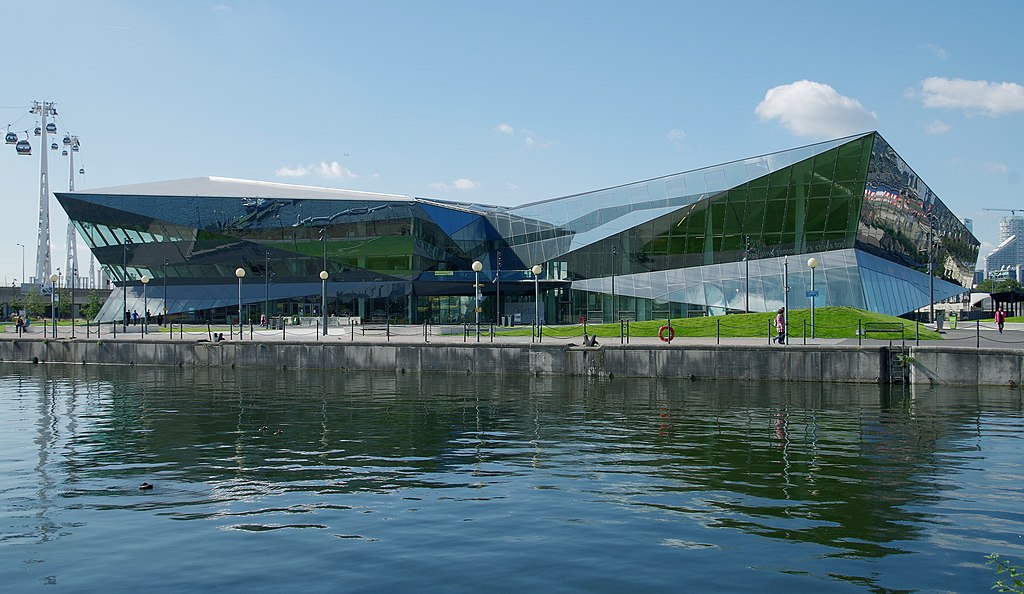
The new building was constructed between 2011 and 2012 by Siemens at a cost of £30 million. It was the first building in the world to achieve the highest possible ratings from both BREEAM Outstanding and LEED Platinum. In 2019, it was acquired by the GLA for the London Docks redevelopment project. In December 2021, it was renamed ‘City Hall’. The site covers 18,000 square metres, and the landscape was designed with sustainability in mind. The building uses a range of eco-friendly technologies, including solar panels and a KNX automation system for lighting, windows, blinds, and heating in both commercial and residential areas.
In conclusion, the history of City Hall demonstrates a shift from architectural innovation to practical, cost-effective governance. From 2002 to 2021, City Hall was a symbol of London’s modern democracy, but its high cost forced a rethink on the viability of the lease. The move to ‘The Crystal’ building is both a cost-saving measure and a statement on the city’s commitment to its ecological strategy. The future of the original building remains open, but the new City Hall continues to serve the city.
Source:
- https://www.bbc.com/news/uk-england-london-54783565?utm_source
- https://www.london.gov.uk/who-we-are/city-halls-buildings-and-squares/city-hall-building
- https://www.british1.co.uk/photos/england-london/london/gallery-2/city-hall-shard-london-uk.html?utm_source
- https://www.budowle.pl/building/london-city-hall
- https://londontopia.net/site-news/featured/ten-interesting-facts-figures-londons-city-hall/