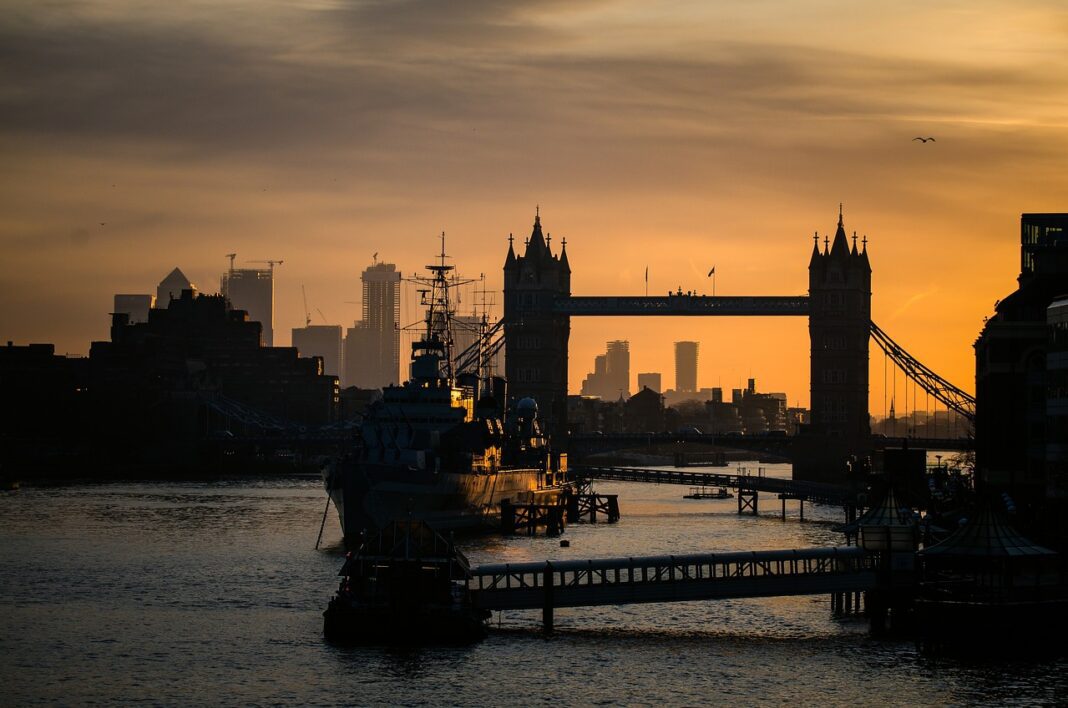

The Second World War was a real test for the residents of London. The British understood that Germany would bomb the metropolis. Those were years of death, trials and adaptation to a new reality. Learn more at london-yes.
Londoners tried to live full lives even despite air raids, mobilisation processes, home losses and the weakening of the nation’s morale. London played a key role in the military operations of Great Britain. According to general estimates, 18,688 civilians died in the city during the war and 1,500,000 were left homeless.
Beginning of the war and evacuation
In June 1935, it became clear the war was inevitable, so London started to prepare for air raids. In 1938, the Women’s Volunteer Service (WVS) was established to support the civilian population, help fight air raids and protect against them. The authorities also began to introduce rules for light camouflage, which would make it difficult to observe the city at night. In the autumn of the same year, Londoners were distributed with gas masks because of the fears that the Germans might use chemical weapons.
The city was surrounded by three rings of defence. The two outer rings were anti-tank lines with trenches, pillboxes and roadblocks and the inner ring was occupied by the army. The London Underground was installed with airlocks to prevent the tunnels from flooding. London citizens were trained in civil defence in the event of air raids. Libraries and museums sent their funds to a safe place outside the metropolis. The city also began the evacuation of children from the city.
Most of the evacuees left by rail, while wealthier families went by car. Children were given to guardians, brothers and sisters were separated. Teachers and students were evacuated together so that education could continue somehow. In addition, hospitals evacuated their patients and the government evacuated civil servants.
The Blitz
The most brutal phase of the war for London was the bombings, which were called the Blitz. It began in September 1940 and lasted until May 1941. During this period, German aircraft dropped thousands of bombs on London, destroying homes, businesses and cultural monuments. The first day of the bombing was called Black Saturday. Starting from that day, the city was bombed for 57 nights in a row.
The city experienced the most terrible bombing on the night of December 29, 1940. The event was called the Second Great Fire of London. At that time, many firefighters were off duty during the Christmas period, so fire from incendiary bombs quickly spread through buildings. The centre of London was badly damaged, including the area around St Paul’s Cathedral. The cathedral itself remained intact and Londoners took it as a sign of victory. 12 firefighters and 162 civilians died that night.
The last major air attack took place on 10–11 May 1941. It killed 1,436 civilians and damaged the buildings of Hammersmith, the House of Commons, Westminster Abbey, the Royal Mint and the Tower of London. In general, 20,000 tons of bombs were dropped on London during the entire period of the Blitz.
Social life
Although the brutal war lasted for several years and there were major air raids, Londoners managed to live their lives amidst the horror. They created families and gave birth to children. The boundaries between home and shelter were blurred. Interestingly, the prostitution business was flourishing in the city at the time. Local theatres were also active and there were advertisements in the newspapers for shows in the West End. The most popular was Applesauce! and variety shows with Florence Desmond, Max Miller and the singer Vera Lynn. Underground restaurants and nightclubs were very popular too, as they were considered safe.
However, life didn’t consist only of entertainment because women also stood in long-hour queues for rations and then there were sleepless nights because of air raids. Until the end of the war, most women worked in defence plants and factories, helping the army. It was also difficult to get new clothes and basic necessities such as scissors, shampoo and stockings. Londoners lived very hard, but they didn’t lose hope.
The metropolis was the resistance centre, as it housed government institutions, intelligence services and military headquarters. A team of cryptographers led by Alan Turing worked in the London suburb of Bletchley Park. They cracked the Enigma code, which gave the Allies an advantage in the war.
Post-war reconstruction
London was very destroyed due to large-scale attacks and in 1945, the question of its rebuilding came up. The process unfolded quickly and in 1948, the city hosted the Summer Olympics, which became an indicator of the metropolis revival.
World War II left a deep mark on the history of London. Those were terrible years of trials and destruction, but they proved the indomitable will of local residents. The city has many monuments dedicated to those who took part in the war and to those who died during it. Londoners remember those events and honour the victims of the war by pinning red poppies on their clothes on Remembrance Day on November 11.