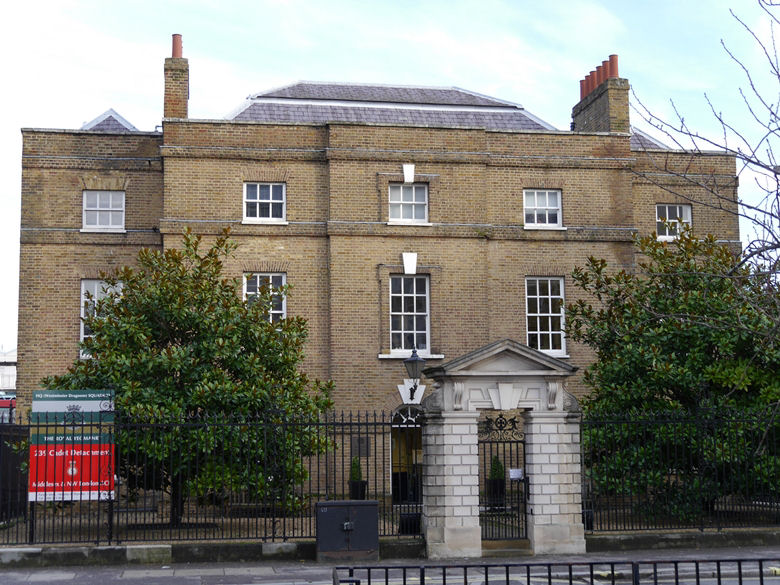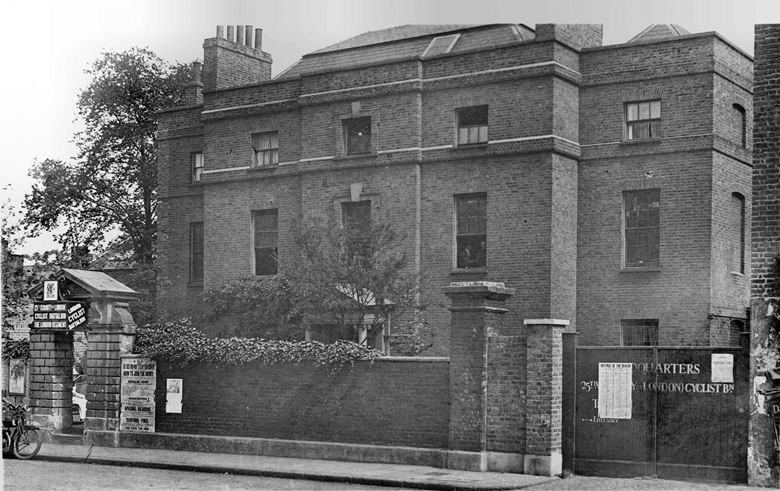

Fulham House is more than just an old building on the London map. Retaining its character and significance over centuries, it has transitioned from a medieval residence to a vital military installation. The site has served as a command centre, a refuge during wartime, and a training ground for young people. Read more on london-yes.
The History and Development of Fulham House
The story of Fulham House began in the 14th century, when the original building was known as Passors, named after the family residing there during the reign of King Edward III. Over the subsequent centuries, it changed hands numerous times, with notable historical figures among its owners. In 1536, it was home to Ralph Warren, a prominent wool merchant and Lord Mayor of London. Passors later belonged to Sir Thomas White, a philanthropist, influential cloth merchant, and also a Lord Mayor of London. Subsequently, the house came into the possession of Henry Cromwell, Oliver Cromwell’s grandfather.
The current Fulham House building was constructed in the early 18th century as a private residence. In 1804, it was converted into a girls’ school called Fulham House School for Girls. Initially, it was leased by the Fleming and Love families, and from 1840, the institution was run by the King family, who maintained it for four decades. In 1879, the house was purchased by local builder Parkins Hammond Jones, who lived there with his family until 1902.
In the early 20th century, Fulham House entered into public service. In 1904, it was acquired by the War Office, transforming it into a Territorial Army headquarters. During the First World War, it served as the base for the 25th Cyclist Battalion, which later saw action in Afghanistan in 1919. After the disbandment of the London Regiment in 1937, it became part of the 47th (2nd London) Divisional Signals of the Royal Corps of Signals.
During the Second World War, Fulham House not only served as a shelter for civilians but also became shrouded in mystical legends. Local residents and refugees who hid in the cellars during bombings recounted mysterious phenomena, including the appearance of Miss Fleming’s ghost. In peacetime, the house returned to military service. Initially, it was used as a command centre for the 23rd (Southern) Corps Signal Regiment. After the Royal Corps of Signals relocated, the building was occupied by ‘B’ (Queen’s Royal Rifles) Company of the 4th Battalion, Royal Green Jackets.
In the early 1990s, Fulham House faced the threat of demolition, as the government considered freeing up the site for development. However, the active stance of the local community changed the course of events. Public campaigns to protect the historical heritage forced the Ministry of Defence to reconsider its plans, and it was decided to renovate rather than demolish the building. In addition to military units, the 239 Cadet Detachment, part of the Army Cadet Force of Great Britain, has also been based there for a long time.
In 2006, Fulham House became the new home for the Royal Yeomanry headquarters. It also houses the Command and Support Squadron of the Westminster Dragoons – one of the oldest and most prestigious units of the Reserve Cavalry. As of 2014, a memorial dedicated to the fallen soldiers of the London Scottish Regiment was housed in its drill hall.
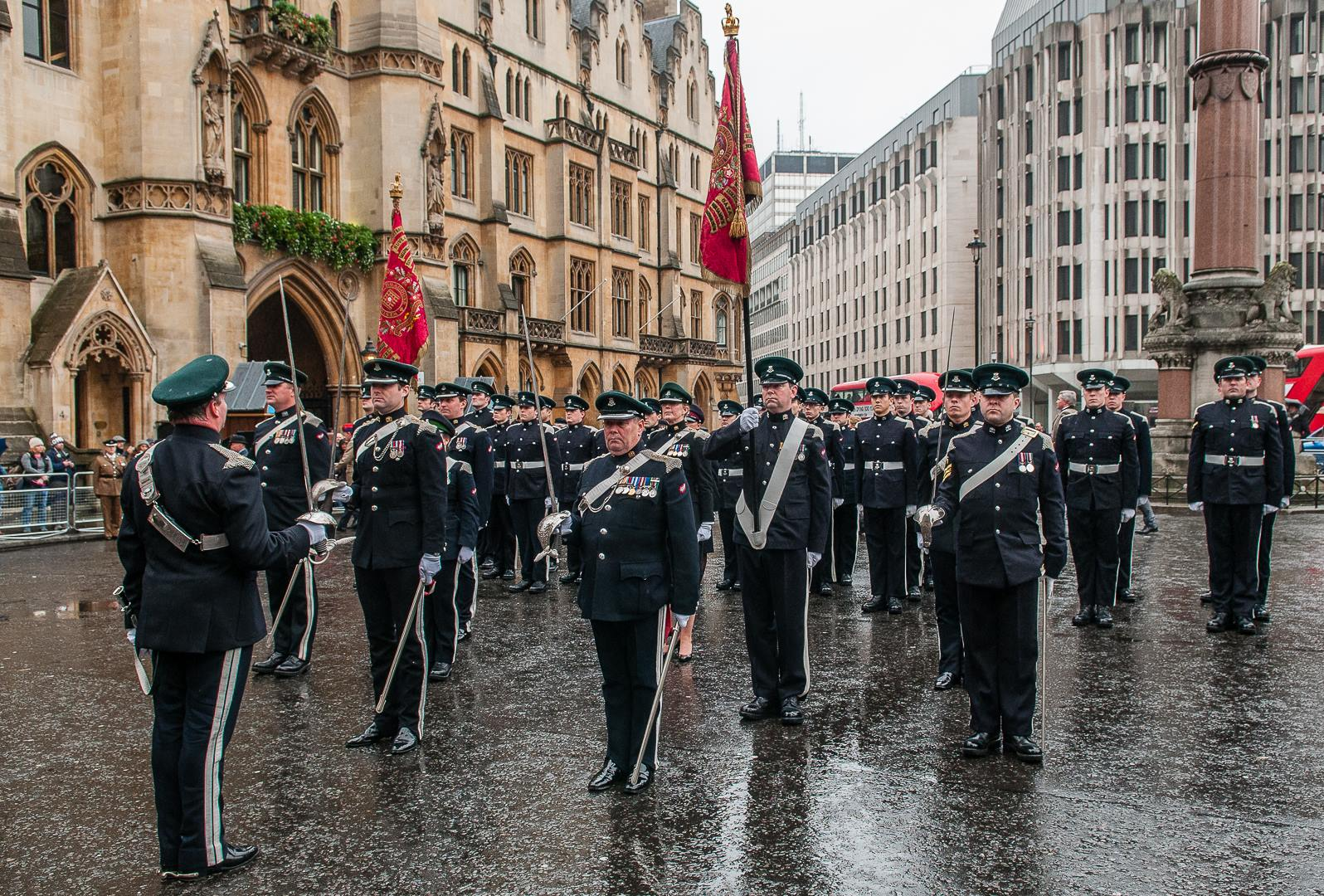
Westminster Dragoons
Recognition and Significance of Fulham House’s Activities
Fulham House stands as a prime example of the successful integration of historical heritage into contemporary urban space. Despite numerous alterations, it has retained its original Georgian appearance and atmosphere. The building’s solid, almost fortress-like architecture not only gives it a monumental feel but also reflects its strategic role in British military history. In a modern context, its walls host corporate events and conferences. The recognition of the house’s architectural and historical value is confirmed by its Grade II listed status.