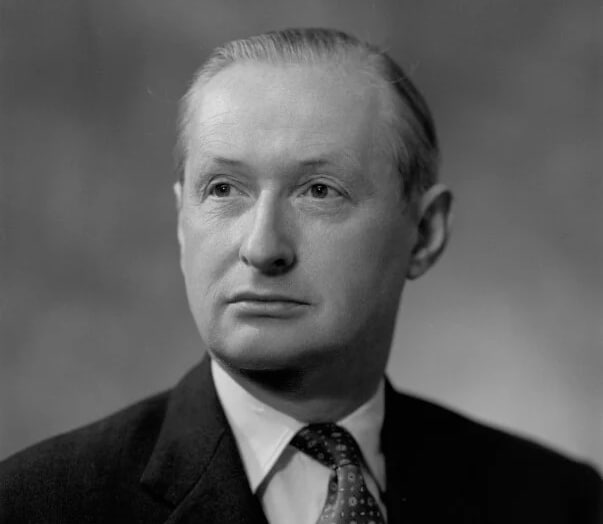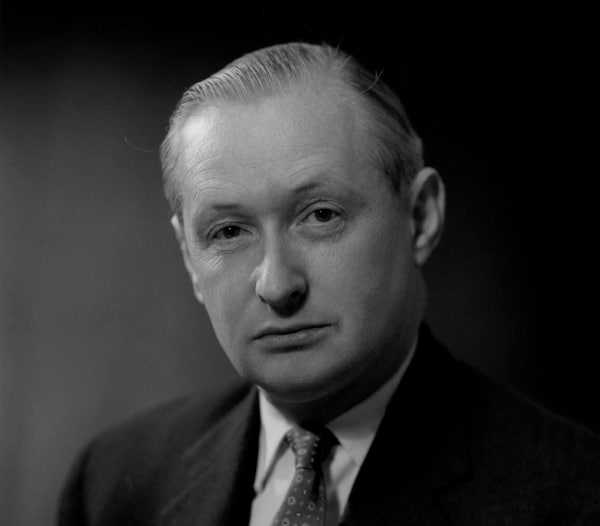

William Deakin’s military career stands as an example of how an analytical mind can alter the course of history. As a combat officer and strategist, he played a decisive role in shifting the direction of British support towards the Yugoslav partisans. His insights from the front became the foundation for key decisions during the Second World War, and after its conclusion, they formed the basis for research that remains relevant even today. Read more on london-yes.
Early Life and Military Career of William Deakin
William Deakin was born on July 3, 1913, in London. He was initially educated at Westminster School, and later at Christ Church, Oxford, where he earned a first-class honours degree in Modern History in 1934. A year later, he married Margaret Ogilvy, but their marriage ended in 1940. In 1936, he was elected a Fellow of Wadham College, solidifying his academic standing.
Following the outbreak of the Second World War, William Deakin joined the Oxfordshire Yeomanry. However, his military career took a new turn two years later when he was seconded to the Special Operations Executive (SOE) and dispatched to Cairo. Here, he found himself at the heart of a complex political standoff. On one side was the British Foreign Office, which supported the Yugoslav monarchists under General Dragoljub Mihailović, and on the other, a faction of the SOE, which considered the communist partisans led by Josip Broz Tito to be the only effective force in Yugoslavia.
In May 1943, William Deakin led a small British mission that was parachuted into the General Staff of the People’s Liberation Partisan Detachments to assess the real situation. They arrived at a critical moment when the rebels were breaking through a German encirclement. His participation in these events not only strengthened his reputation but also fostered close ties with Josip Broz Tito, which had long-term significance for Allied strategy in the region.
In late 1943, William Deakin started a new family, marrying his SOE colleague, Livia Stella. As he rose to the rank of colonel, his subsequent work on the Yugoslav front was conducted from Italy, where the British special service had a base near Bari. After the cessation of active hostilities, he returned to the Balkans in 1945-1946 as his country’s diplomatic representative, which allowed him to deepen contacts with Yugoslavia’s new political leadership. Enjoying the trust of the partisan leaders, he frequently travelled the country and observed it from within.
In the mid-1940s, William Deakin returned to the academic environment of Oxford. Winston Churchill personally invited him to lead the documentation of events from the Second World War. Thanks to generous, albeit limited, funding from the French benefactor Antonin Besse, Deakin initiated the creation of a new college for postgraduate education. Despite his administrative duties and participation in Winston Churchill’s foreign trips, he managed to write the important monograph “The Brutal Friendship,” dedicated to the relationship between Fascist Italy and Nazi Germany.
When St Antony’s College became a fully-fledged educational institution open to women, William Deakin stepped down as head in 1968. He settled in the French municipality of Le Castellet, near Toulon. Despite sometimes having a controversial attitude towards living in isolation, he gladly visited London, where he led an active intellectual life — participating in meetings, speeches, and discussions related to the study of the Second World War. Continuing his creative work until the end of his life, he passed away on January 22, 2005, in Le Castellet.
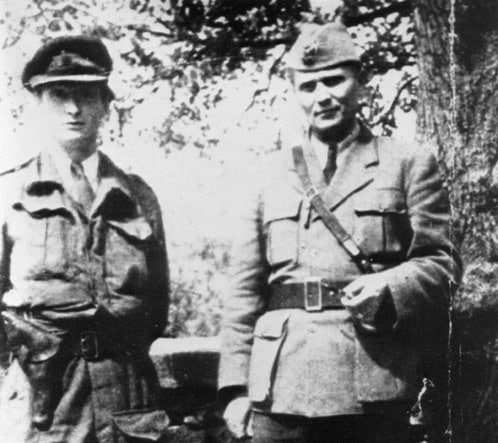
William Deakin and Josip Broz Tito, 1943
Recognition and Significance of William Deakin’s Military Activities
William Deakin remains a unique figure who combined frontline bravery with analytical acumen. As a distinguished historian and founder of St Antony’s College at Oxford, he made a significant contribution to the development of postgraduate education. In the academic sphere, he left behind a number of thorough works, including “The Brutal Friendship: Hitler, Mussolini, and the Fall of Italian Fascism, 1942–1945,” “The Embattled Mountain,” and the co-edited “British Political and Military Strategy in Central, Eastern, and Southern Europe in 1944.” For his service, he was knighted, awarded the Legion of Honour, the Order of the National Hero, and elected a Fellow of the British Academy.