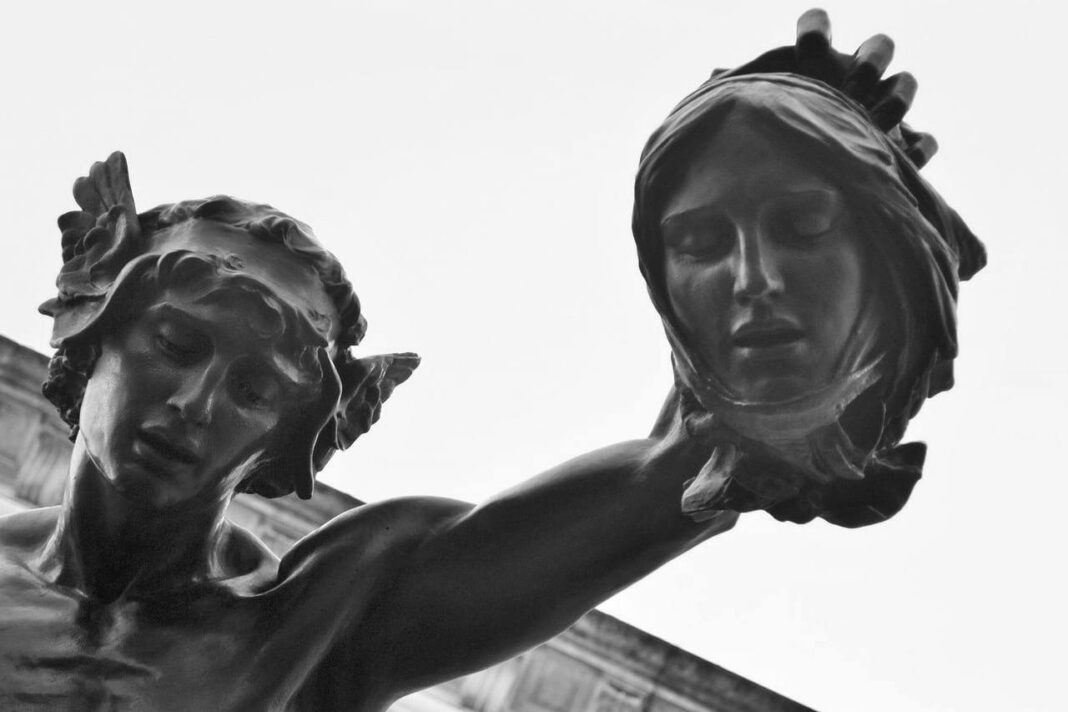

Henry Charles Fehr is remembered as one of the most prominent British creators of war memorials following the First World War. His striking bronze figures of Peace, Victory, and Saint George became instantly recognisable symbols of grief and hope, gracing monuments across England, Scotland, and Wales. His body of work seamlessly combined artistic mastery, a profound understanding of human emotion, and a heartfelt desire to preserve the memory of that heroic generation. Read more on london-yes.
The Early Life and Career of Sculptor Henry Charles Fehr
Born in Forest Hill, London, on November 4, 1867, Henry Charles Fehr began his artistic journey after attending the City of London School. He entered the studio of Horace Montford, a renowned sculptor and stonemason who played a pivotal role in the young artist’s development. Crucially, Montford supported Fehr’s application to the Royal Academy Schools, where he began his studies in 1885. Fehr earned several academic honours and came close to winning the Gold Medal for Sculpture in 1889, narrowly losing out to his contemporary, Hamo Thornycroft.
Following his time at the Royal Academy, Henry Charles Fehr worked as an assistant in the studio of Thomas Brock, one of the most celebrated British sculptors of the late 19th century. It was there that he created his first monumental piece, The Rescue of Andromeda. The work was eventually acquired for the Tate Gallery, a significant endorsement from the art world. However, the artist later opposed the institution’s decision to move his work from the exhibition hall to an outdoor location. Despite this dispute, the success of The Rescue of Andromeda defined the trajectory of his subsequent career. The naturalism of the forms, attention to detail, and realistic style led art critics to place him within the influential “New Sculpture” movement.
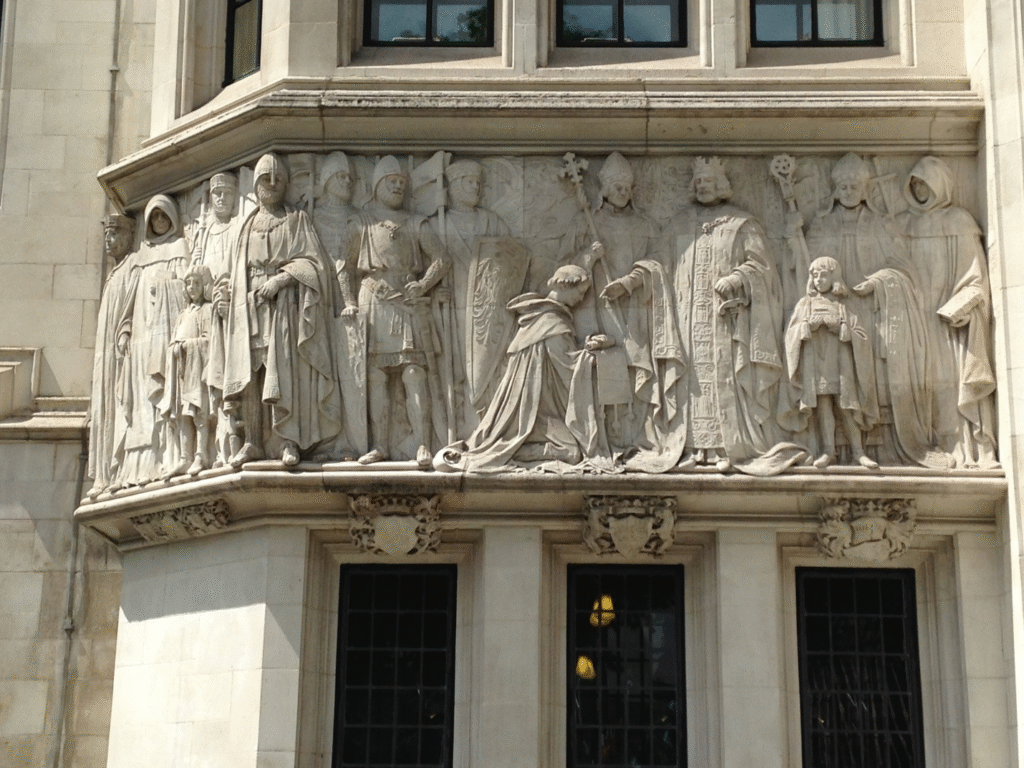
Henry Charles Fehr actively collaborated with leading architects of his era. A significant phase involved his work for the firm J.S. Gibson & Partners, who commissioned him to create decorative elements for several architectural projects. These included the West Ham Technical Institute in London, a school in Scarborough, Walsall Central Library, and Middlesex Guildhall in Parliament Square. In 1898, the sculptor created a colourful plaster relief frieze for the same company, depicting dramatic scenes from the Wars of the Roses for Wakefield County Hall. This work further demonstrated his skill in blending historical subject matter with expressive sculptural form.
In the aftermath of the war, Henry Charles Fehr turned his focus to the themes of memory, mourning, and heroism—subjects that became central to the work of many British sculptors after the First World War. In October 1919, the Royal Academy of Arts in London organised a major exhibition of war memorial designs. Fehr presented three sculptural figures that would later achieve iconic status: Peace, holding a dove; the winged figure of Victory; and Saint George, with a shield and sword. Throughout the 1920s, these powerful figures were cast in bronze and featured on numerous war memorials across Great Britain.
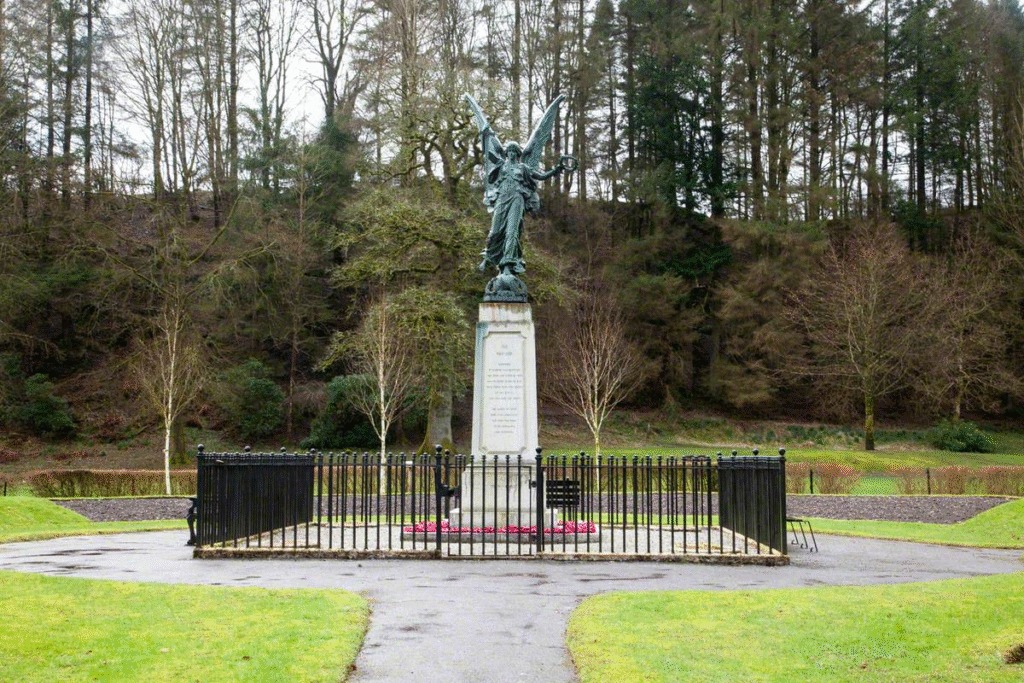
In some towns, Henry Charles Fehr concentrated on a single image—the winged figure of Victory, holding a laurel wreath and an inverted sword as a symbol of the end of the battle. Such monuments adorn Lockerbie and Langholm in Scotland, as well as Eastbourne and Grangetown in Wales. Variations on this symbolism can also be seen in his work for Keighley, where he created a figure of Peace, complemented by bronze statues of an infantryman and a sailor. Until his final years, he remained devoted to the theme of humanity, its dignity, and its spiritual strength. Henry Charles Fehr passed away in London on May 13, 1940.
Library of Congress Blogs
The Recognition and Significance of Henry Charles Fehr’s War Memorials
Henry Charles Fehr’s war memorials represent a crucial contribution to British monumental art in the first half of the 20th century. Throughout the 1920s, he completed a series of these powerful works in various UK towns, including Leeds, Colchester, and Keighley. These monuments are rich with the allegorical images of Peace, Victory, and Saint George — symbols of resurgence, courage, and moral fortitude. The sculptor was a master of bronze, creating dynamic and detailed figures that successfully blended realism with a monumental scale.
Art UK