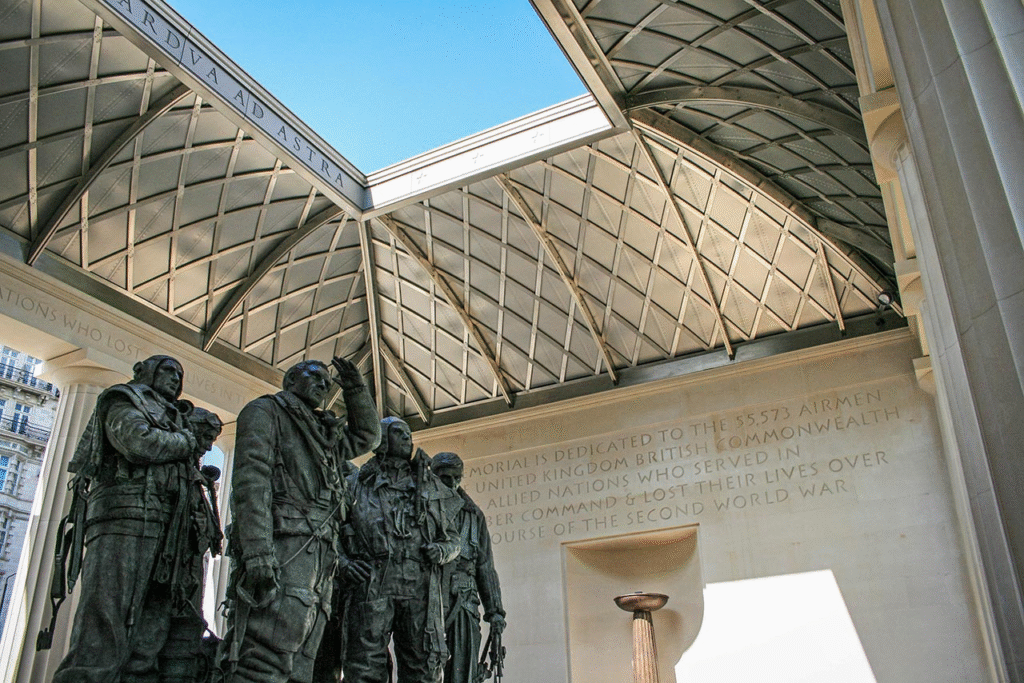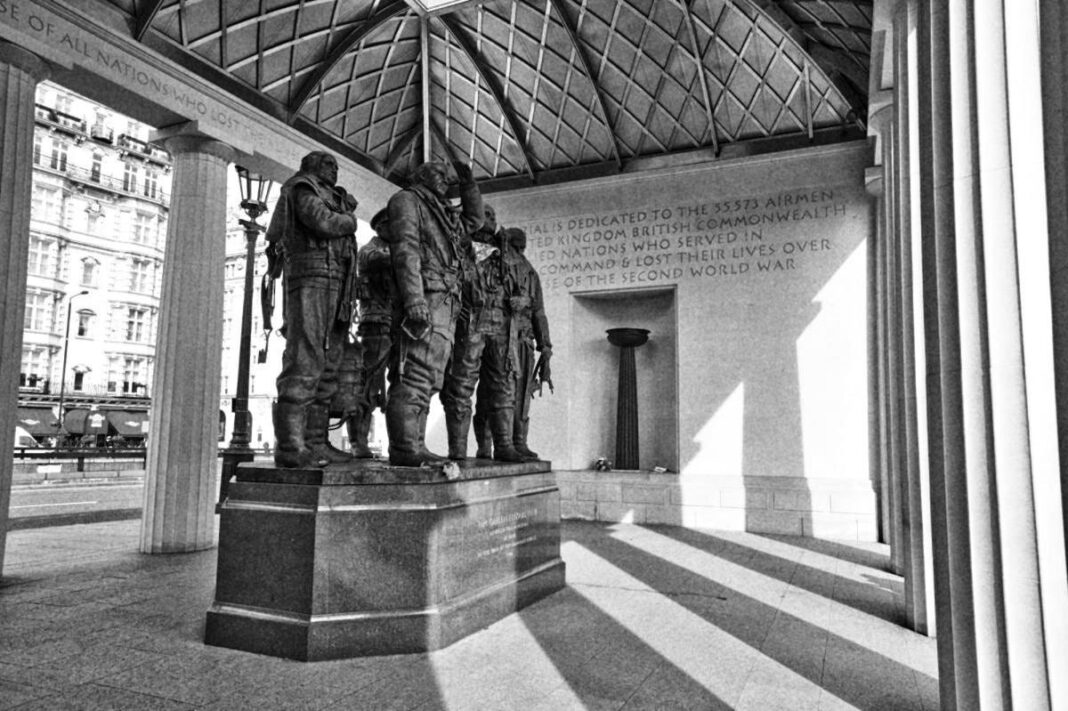

Among London’s architectural landmarks, The Royal Air Force Bomber Command Memorial holds a profoundly special place. It stands as a magnificent tribute to the 55,573 airmen who made the ultimate sacrifice during the Second World War. Located near Hyde Park Corner, it is not just a monumental feature of the capital but a powerful, enduring reminder of the courage and selflessness of those who defended global freedom. Read more london-yes.
The Story Behind the Design and Unveiling
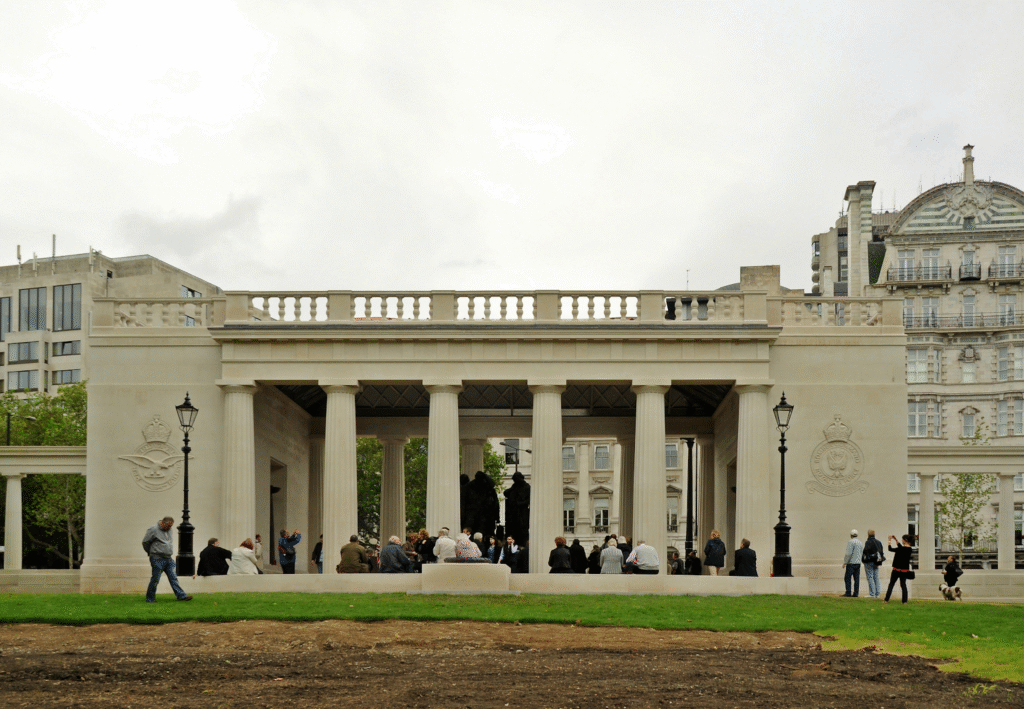
Facing the famous Hyde Park Corner on the south side of Piccadilly, the RAF Bomber Command Memorial rises in stately grandeur. This monumental structure is a poignant symbol of respect and gratitude for the 55,573 bomber aircrew who lost their lives in the Second World War. The fallen were drawn not only from the United Kingdom but also from Allied nations including Canada, Australia, New Zealand, Poland, and Czechoslovakia. The memorial also serves as a solemn nod to the civilian victims of all nationalities who perished during the bombing campaigns.
The concept was the brainchild of Liam O’Connor, a renowned British architect specialising in memorial structures. His vision was brought to life by a dedicated team, including William Sugg, who was responsible for the lighting design. A particular challenge was blending the traditional design of lanterns with modern, energy-efficient technology. The lighting scheme was meticulously developed to preserve the site’s historical atmosphere while adhering to contemporary ecological standards.
The ceremonial unveiling of the memorial took place on 28 June 2012, led by Her Majesty Queen Elizabeth II. The event drew over 6,000 veterans and family members of the lost airmen. The occasion’s most symbolic and moving moment was the flypast of the Avro Lancaster PA474. Carrying 800,000 red poppies, the aircraft soared over Green Park, scattering the petals in a touching gesture that provided a deeply emotional and lasting tribute to the heroism of the deceased.
The centrepiece of the Bomber Command Memorial is a powerful bronze sculpture depicting seven aircrew members in full kit, appearing as if they have just returned from a mission. The pavilion itself features an open design with an aperture in the roof, allowing natural daylight to illuminate the figures beautifully. Engraved on the walls are quotes from Winston Churchill, serving as a constant reminder of the staggering cost of victory. As visitors pass through the memorial, they are intended to always see the silhouettes of the figures against the sky.
Following its grand opening, the RAF Bomber Command Memorial quickly became a focal point for charitable initiatives. One of the most heartwarming examples involved Les Munro, a Squadron Leader in the Royal New Zealand Air Force and one of the last surviving members of the famous Dambusters raid. In March 2015, understanding the critical need to preserve the memorial for future generations, he planned to auction his military medals and logbook to raise funds for its upkeep. Ultimately, thanks to generous donations from Sir Michael Ashcroft and the Museum of Transport and Technology in Auckland, the auction was cancelled. Munro’s medals remained in the museum, serving as a public testament to his selflessness and profound sense of duty.
Recognition and Enduring Significance
The Royal Air Force Bomber Command Memorial stands as a majestic and vital memorial to the 55,573 crew members who paid the ultimate price during the Second World War. Through the language of considered classicism, architect Liam O’Connor successfully conveyed the grandeur and restrained dignity of their heroism. The memorial is overseen by The Royal Air Force Benevolent Fund, which ensures its meticulous care and preservation for generations to come. Thanks to the generosity of the public, over £2 million has been raised, guaranteeing the long-term upkeep of this hallowed place of remembrance.