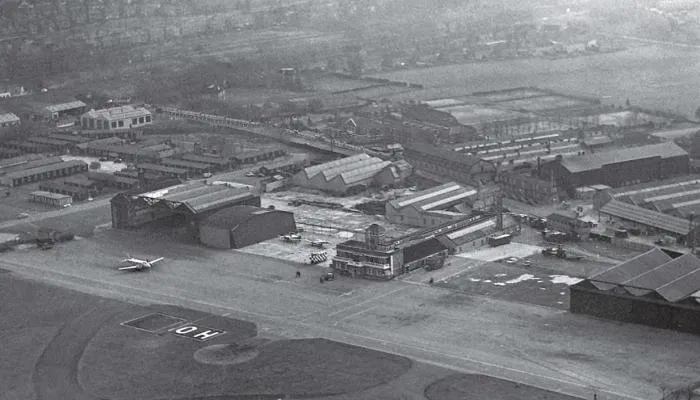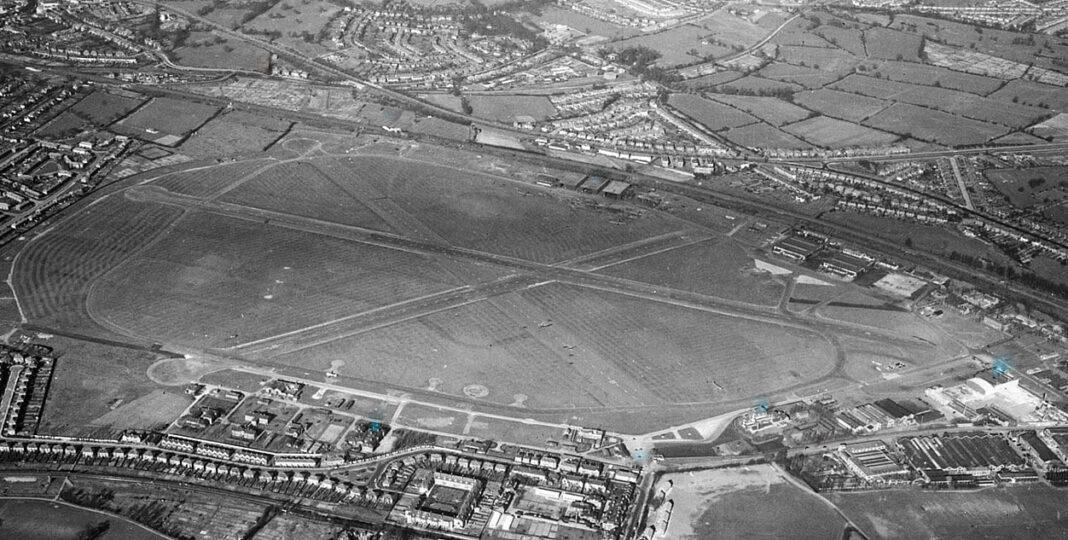

Few places in the history of British aviation can rival Hendon Aerodrome. It was here that early flight experiments took off, records were set, and the foundations of British air travel were laid. Hendon became a launchpad for dreams and achievements that changed our perception of the sky forever. Read more on london-yes.
The History of Hendon Aerodrome’s Founding and Development
Hendon Aerodrome’s aviation story began in the early 20th century. Between 1908 and 1910, local manufacturers Everett and Edgecumbe attempted to test their aircraft, symbolically named the Grasshopper. Despite their ambition, the machine never managed to get off the ground. In 1910, the Daily Mail newspaper sponsored a thrilling air race from London to Manchester. Englishman Claude Grahame-White and Frenchman Louis Paulhan went head-to-head for aerial supremacy. Although Grahame-White made two valiant attempts to win, it was Paulhan who ultimately triumphed. This race marked the first major aviation event that Hendon witnessed.
Undeterred, Claude Grahame-White went on to establish the Grahame-White Aviation Company, transforming over 200 acres of land in Colindale into a state-of-the-art aerodrome. Just two years later, in 1912, it hosted the first Aerial Derby, a spectacle that captivated not just London but the entire country. Around three million people watched from below, while tens of thousands bought tickets for a closer look at the breathtaking aerial manoeuvres. These air shows became so popular that they soon drew crowds of over 100,000 spectators.
Beyond the spectacles, Hendon Aerodrome became a hub for aircraft manufacturing. During the First World War, it was a massive production site. To facilitate the transportation of over 3,500 workers and materials, the Midland Railway company built a dedicated rail spur with a platform and a loop line around the factory. Claude Grahame-White’s dream was to turn Hendon into the “Charing Cross of international air routes”. However, in 1922, the Air Ministry took over control of the aerodrome, leading to a lengthy legal dispute. By 1925, Grahame-White had left the place he once considered his life’s work.
Even before the Second World War, the aerodrome’s future was in question. Its strategic location made it a clear target for enemy bombers. The situation only worsened during peacetime: the short runways and rapid urban expansion nearby made the site increasingly unsuitable for modern aviation. In November 1957, the last flying unit, the Metropolitan Communication Squadron, left Hendon. The base officially closed its doors on April 1, 1987.
Today, the Hendon Aerodrome site is home to new landmarks: the Grahame Park housing estate, the Hendon Police College, and the Royal Air Force Museum. Formally opened by Queen Elizabeth II on November 15, 1972, the latter became the main guardian of the site’s history. Initially, its hangars housed 36 aircraft, but the collection has since expanded significantly. By 2012, it featured over 100 aircraft, including the legendary Avro Lancaster S-Sugar, which completed an incredible 137 nighttime combat missions. Any aircraft that couldn’t fit in the main exhibition were either sent to other museums or stored in aviation depots.
The Legacy and Significance of Hendon Aerodrome
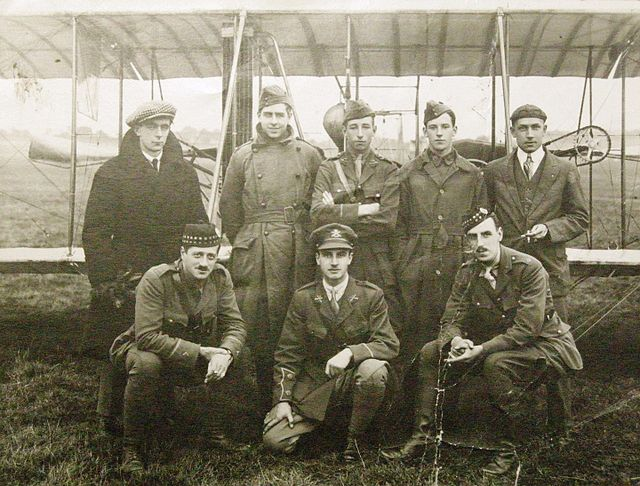
Hendon Aerodrome left an indelible mark on British aviation history. It was the birthplace of experiments in airmail, parachute jumps, and night flying. The aerodrome became a centre of innovation and bold ideas, attracting pioneers like Louis Blériot and Claude Grahame-White, who transformed it into a vital hub for manufacturing and training. During the wars, Hendon played a key transport role and weathered enemy attacks. Although it eventually gave way to the city’s growing needs in peacetime, its significance has never faded.