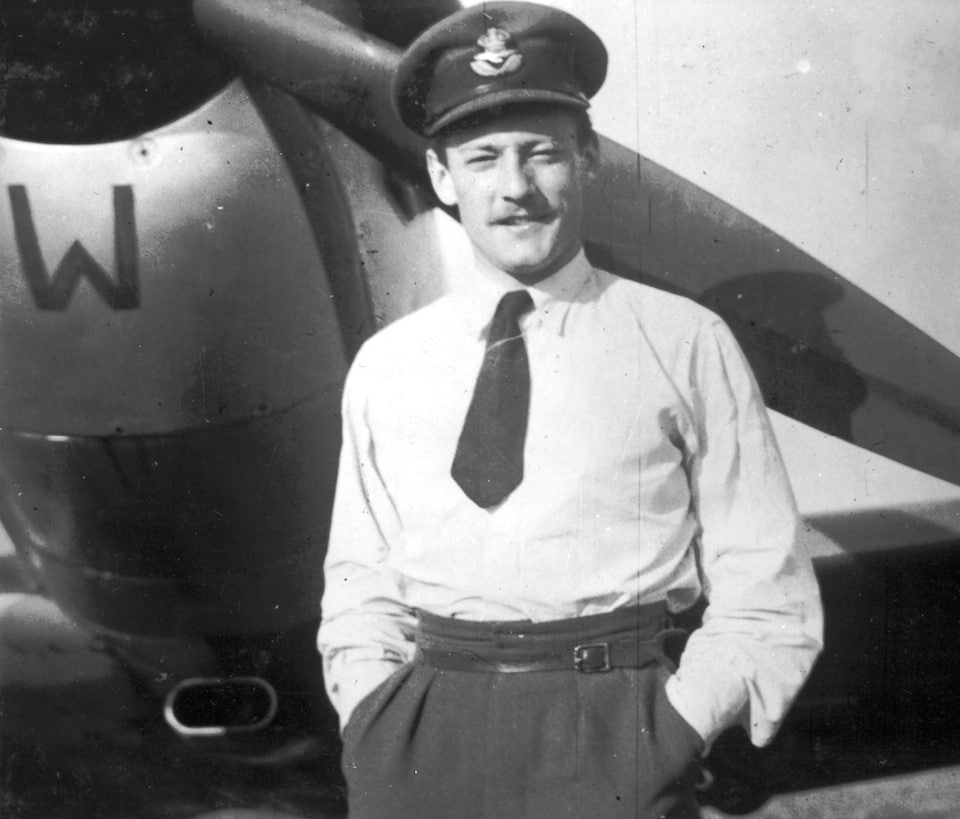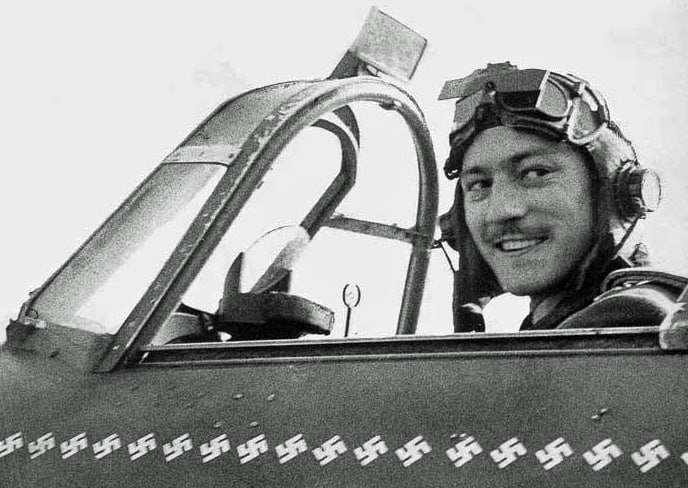

The name Robert Stanford Tuck is a legend in UK aviation. He was one of the most prominent British flying aces of the Second World War, whose military career combined courage with a remarkable knack for survival in the most dangerous situations. His combat record and legendary “Tuck’s Luck” made him a symbol of the bravery and resilience of Royal Air Force (RAF) pilots. Read more on london-yes.
The Early Life and Combat Career of Robert Stanford Tuck
Born on 1 July 1916 in Catford, London, Robert Stanford Tuck didn’t excel academically and left St Dunstan’s College in 1932. The young man then chose a life at sea, joining the merchant navy. However, his true calling lay in the skies, and by 1935 he’d joined the RAF, beginning his service as a provisional pilot officer. His first posting was to 65 Squadron, where he gained valuable experience flying combat aircraft during his probationary period.
In May 1940, Robert Stanford Tuck was given command of 92 Squadron, which was based in Croydon and flew Spitfires. On 23 May, he undertook his first combat sortie over Dunkirk, shooting down three German fighters in a single day. The next day, he added two more Luftwaffe bombers to his tally. His effectiveness grew so quickly that on 11 June 1940, he was awarded the Distinguished Flying Cross (DFC).
Throughout the summer of 1940, as the Battle of Britain unfolded, Robert Stanford Tuck repeatedly proved his courage. On 18 August, during an attack on German Junkers Ju-88s, he shot down one aircraft and damaged another, but was forced to bail out himself after his Spitfire was hit. On 25 August, he managed to destroy a Dornier Do 17 near the British coast. Despite his engine being severely damaged, he performed a forced landing and brought the aircraft to safety on land.
In July 1941, Robert Stanford Tuck was promoted to acting squadron leader and took command of a unit at RAF Duxford. It was here that he led daring raids over northern France. He later briefly travelled to the United States with other RAF pilots to raise awareness of Britain’s fight against Nazi Germany. Upon his return, he continued his service, this time based at Biggin Hill. However, on 28 January 1942, fate took a sudden turn. During a low-level “Rhubarb” operation over the French coast, his Spitfire was hit by anti-aircraft fire near Boulogne. He made a crash landing but was captured by German soldiers.
Robert Stanford Tuck spent the next three years in prisoner-of-war camps, the most famous of which was Stalag Luft III in Żagań, Poland. In February 1945, along with Polish pilot Zbigniew Kustrzyński, he made a successful escape during the camp’s evacuation. His childhood knowledge of Russian, learned from his nanny, proved invaluable. This allowed him to fight alongside Soviet troops for a time before he found his way to the British Embassy in Moscow. From there, he was sent home by sea to Southampton.
After returning to England, Robert Stanford Tuck continued his service in the RAF. In September 1945, his squadron leader rank was made permanent, and in April 1946, he became an acting wing commander. He retired from active service in 1949. In his retirement, he continued to work as a test pilot, notably on the English Electric Canberra, one of Britain’s first jet bombers. He later chose to withdraw from public life and dedicated himself to mushroom farming on his farm in Kent. Robert Stanford Tuck passed away on 5 May 1987.
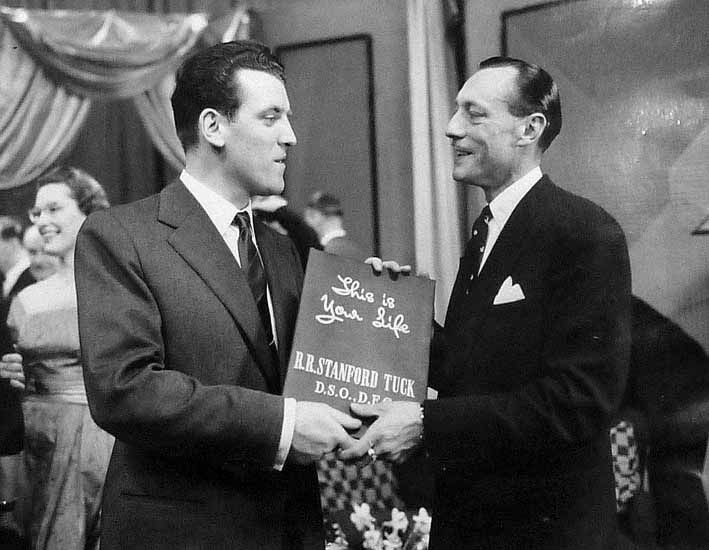
Robert Stanford Tuck’s Legacy and Aviation Achievements
Robert Stanford Tuck left an indelible mark on the history of the RAF as one of the most celebrated British flying aces of the Second World War. His combat record—29 confirmed victories, two shared kills, six probable kills, and several damaged enemy aircraft—placed him among the leading participants of the Battle of Britain. He survived countless forced landings, bailouts, and combat wounds that, under other circumstances, would have been fatal.